
1. Explanation of the condition
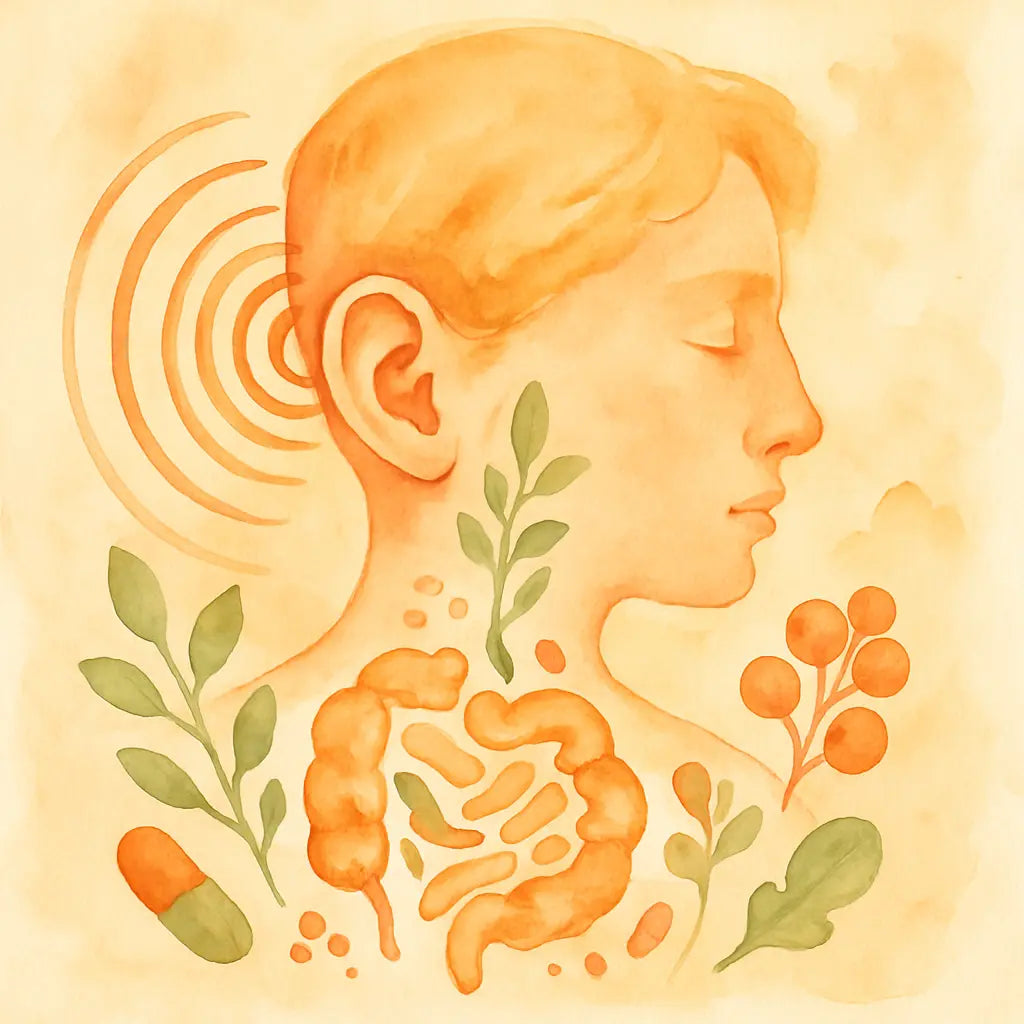
Tinnitus is the conscious perception of a sound (ringing, buzzing, hissing, or roaring) in the absence of an external acoustic stimulus. It is not an isolated disease, but rather a neuroperceptive phenomenon in which the auditory system—from the cochlea to the cortex—increases central "gain" in response to insufficient or distorted signals, generating spontaneous activity that the brain interprets as sound. This often coexists with changes in connectivity, abnormal neuronal synchronization, and alterations in GABAergic inhibition.
When considering the gut-immune-brain-ear axis, the gut microbiota emerges as a modulator of neuronal excitability. A balanced gut ecosystem produces metabolites (butyrate and other SCFAs), vitamins, and immunoregulatory signals that help maintain barrier integrity and a systemic anti-inflammatory tone. Dysbiosis, on the other hand, increases intestinal permeability, promotes endotoxin translocation, and elevates low-grade neuroinflammation—a context that facilitates auditory hyperexcitability. This protocol addresses, sequentially, microbiota remodeling, barrier reinforcement, and modulation of oxidative and mineral stress, with the aim of progressively reducing the "internal volume" of tinnitus.
2. Possible causes of the condition
- Intestinal dysbiosis: loss of diversity and overgrowth of pathobionts that alter immunoneural signaling.
- Intestinal hyperpermeability: failures in tight junctions that allow the passage of pro-inflammatory molecules.
- SCFA deficiency (especially butyrate): compromises colonocyte energy and tolerogenic tone.
- Alcohol, antibiotics, and a low-fiber diet: factors that suppress beneficial bacteria and promote biofilms.
- Chronic stress and poor sleep: raise cortisol and decrease the resilience of the gut-brain axis.
- Exposure to intense noise: peripheral damage that, combined with systemic inflammation, enhances central gain.
- Mineral deficiencies: Low magnesium and zinc levels increase excitability and worsen the perception of tinnitus.
3. Possible symptoms of the condition
- Auditory: continuous/intermittent ringing, hypersensitivity to noise, feeling of fullness in the ear, variations with stress or fatigue.
- Digestive: bloating after meals, irregular transit, sensitivity to fermentable carbohydrates, postprandial discomfort.
- Neurocognitive: brain fog, fatigue, irritability, lower threshold of tolerance to stimuli.
- Autonomic symptoms: non-restorative sleep, mild palpitations, cervical and jaw tension.
4. Importance of applying a comprehensive protocol
Sequence before intensity
Treating microbiota-related tinnitus with a single supplement often fails. The body needs a logical order: first, reduce the pressure from pathogens and biofilms; then, reinforce the gut barrier with butyrate and specific fibers; re-inoculate with strains that "close" tight junctions; and, in parallel, maintain antioxidants and mineral cofactors. The correct sequence reduces adverse reactions, accelerates adaptation, and transforms temporary improvements into stable results.
Multilayers that enhance each other
AntiBac prepares the ground; PHGG and Tributyrin provide substrate and signaling to rebuild mucosa; LGG and L. reuteri strengthen the barrier; NAC quells the oxidative excess that fuels hyperexcitability; Essential Minerals stabilize neurotransmission. Each layer enables the next to function more effectively.
Measurement and feedback
Dividing the process into phases allows for monitoring simple markers: tinnitus intensity upon waking and falling asleep, sleep quality, bowel regularity and bloating, tolerance to noisy environments, and daytime energy. This data is used to adjust dosages, determine whether to lengthen or shorten phases, and personalize maintenance.
Relapse prevention from the start
The protocol includes strategies from day one to sustain results: probiotic rotation, daily fiber intake, stress management, and an action plan for travel, periods of high workload, or after a course of antibiotics. It's not a quick fix; it's a comprehensive roadmap.
5. Complete list of recommended supplements
- Essential Minerals (multimineral formula in capsules).
- Natural Antibacterial Formula (berberine, allicin and oleuropein).
- N-acetylcysteine (NAC) in 600 mg capsules (high doses).
- Tributyrin (advanced-release butyrate source).
- L. reuteri DSM 17938 .
- L. rhamnosus ATCC 53103 (LGG).
- Partially hydrolyzed guar gum (PHGG) .
6. Detailed scientific support (by supplement and formula)
6.1. Essential Minerals (multimineral)
Why they are essential for overall health
Minerals are essential cofactors in hundreds of enzymatic reactions that sustain life: energy production (ATP), neurotransmitter synthesis, maintenance of the intestinal barrier, liver detoxification, antioxidant response, and muscle contraction and relaxation. A subclinical deficiency of magnesium or zinc is not always detected in conventional blood tests, but it can manifest as fatigue, irregular sleep, hypersensitivity to stimuli, and reduced stress tolerance—all of which tend to amplify the perception of tinnitus.
Main mechanism in the protocol
Magnesium modulates NMDA receptors and promotes synaptic stability; zinc participates in neurotransmission and tissue repair; selenium, manganese, and copper are part of antioxidant systems (GPx, SOD) that suppress low-grade inflammation. By optimizing these cofactors, we reduce neuronal hyperexcitability and improve the resilience of the auditory system.
How to use it and what to expect
In Phase 1, the dose is divided into two servings (breakfast and lunch) for digestive adaptation; from Phase 2 onwards, it is concentrated into 3 capsules with lunch to ensure consistency. It is common to notice improved sleep, reduced muscle tension, and increased noise tolerance starting in the second week.
6.2. AntiBac Formula (Berberine + Allicin + Oleuropein)
Main mechanism
It is a botanical combination with antimicrobial and anti-biofilm action that reduces opportunistic pathogens without excessively harming commensal organisms. It decreases the antigenic load that triggers systemic inflammation and promotes a more hospitable environment for recolonization by beneficial strains.
Impact on tinnitus linked to microbiota
Lowering the pressure of pathobionts and the formation of biofilms reduces intestinal permeability and, consequently, the inflammatory signal that sustains auditory hyperexcitability. This doesn't "cure" on its own, but it opens the door for butyrate, fiber, and probiotics to strengthen the barrier.
Use within the protocol
The dosage is intensified in Phase 2 (three doses with meals), and a pause is considered at the start of Phase 3 if bowel movements and GI symptoms are stable. If die-off reactions occur, the dose is temporarily reduced, and hydration and PHGG are prioritized.
6.3. N-Acetylcysteine (NAC) 600 mg
Main mechanism
Glutathione precursor: increases cellular antioxidant capacity, modulates redox pathways and attenuates the response to peripheral and central oxidative stress.
Impact on auditory hyperexcitability
Reducing free radicals and reactive aldehydes reduces the inflammatory "fog" that exacerbates the auditory circuit. Patients with noise exposure, poor diet, or periods of high stress experience better recovery when NAC is used consistently.
Use within the protocol
Fixed rule: always on an empty stomach and before bed. Base dose 600 mg + 600 mg; can be increased to 1,800 mg/day divided if the oxidative load is high and tolerance is good.
6.4. Tributyrin
Main mechanism
Distal-release butyrate prodrug that feeds colonocytes, strengthens tight junctions, and regulates the local and systemic immune response.
Impact on the gut-brain axis
Increasing butyrate reduces endotoxin translocation, lowers low-grade inflammation, and improves neuromodulatory signaling, which impacts auditory excitability.
Use within the protocol
It is introduced from Phase 1 at mild doses (500 mg with dinner) and scaled up in Phase 2–3 to 1000 mg/day depending on response and tolerance.
6.5. L. reuteri DSM 17938
Main mechanism
Mucosal-affinity strain that promotes mucin production and strengthens tight junctions, in addition to modulating immune tolerance.
Specific role in this protocol
Ideal for fragile or sensitive mucous membranes. It helps to "seal" the barrier in conjunction with butyrate and fiber, reducing immune activation that fuels excitability.
Use within the protocol
It is taken with dinner (and in Phase 2 also with breakfast if required). It can be alternated with LGG for maintenance to support functional diversity.
6.6. L. rhamnosus ATCC 53103 (LGG)
Main mechanism
Robust strain that adheres to the intestinal epithelium and increases the expression of tight junction proteins (ZO-1, occludin, claudins), reducing permeability.
Specific role in this protocol
It functions as a "biological scaffold" that stabilizes the barrier while butyrate levels normalize. Its effect is perceived as improved digestive tolerance and reduced reactivity to food.
Use within the protocol
Preferably with breakfast; during intensive phases, use twice daily. For maintenance, alternate days with L. reuteri .
6.7. Partially hydrolyzed guar gum (PHGG)
Main mechanism
Slowly fermentable, well-tolerated prebiotic fiber that promotes sustained SCFA production (including butyrate) and feeds beneficial bacteria.
Digestive and systemic benefits
It improves regularity, softens transit, reduces gas in the medium term and stabilizes postprandial glycemic peaks, helping to lower low-grade inflammation.
Use within the protocol
The dosage is titrated from 3 g/day up to 6–10 g/day divided, always with good hydration. Maintenance dosages are 5–7 g/day to prevent relapses.
7. Synergy: How the Compounding Team Achieves the Goal
- Microbial decompression → Targeted reseeding: AntiBac lowers pathogens/biofilm; LGG and L. reuteri take advantage of this “ecological space” to consolidate the barrier.
- Barrier and metabolites: PHGG + Tributyrin rebuild mucus and tight junctions, raise butyrate and reduce endotoxin translocation.
- Neuroprotection and cofactors: NAC shuts down excess oxidation; Minerals ensure that enzymes and synapses function stably.
- Practical results: less strain, better sleep, greater noise tolerance, and a gradual decrease in the intensity of the ringing.
8. Phases of the protocol and daily program
Suggested total duration: 12 weeks. Phase 1 (adaptation) lasts a maximum of 5 days . Schedules by time of day, without tables, for mobile reading.
Phase 1 — Adaptation (Days 1–5)
Aim
Start the process with minimal reactivity: introduce all axes at conservative doses, prepare barrier and evaluate tolerance.
Duration
5 days maximum.
Supplements and base dosage
- Essential Minerals: 1 capsule with breakfast + 1 capsule with lunch (2/day).
- AntiBac: 1 capsule with lunch.
- NAC: 600 mg on an empty stomach + 600 mg at night.
- Tributyrin: 500 mg with dinner.
- LGG: with breakfast.
- L. reuteri : with dinner.
- PHGG: 3–5 g/d, start at 3 g and increase according to tolerance.
Progress markers
- Less postprandial distension, Bristol stools 3–4.
- More continuous sleep, clearer waking.
- Buzzing is slightly less intrusive when sleeping.
Daily Schedule — Phase 1
- Morning (fasting, 30 min before breakfast): NAC 600 mg + 300–500 ml water.
- Morning (with breakfast): Minerals 1 capsule + LGG.
- Mid-morning (fasting): PHGG 1–2 g in water.
- Midday (with lunch): Minerals 1 capsule + AntiBac 1 capsule.
- Late (fasting, 3 h later): PHGG 1–2 g.
- Late evening (with dinner): L. reuteri + Tributyrin 500 mg.
- Night (before sleeping): NAC 600 mg.
Phase 2 — Antimicrobial Reset + Barrier (Weeks 2–3)
Aim
Firmly reduce pathobionts and biofilms while reinforcing the barrier with butyrate and fiber.
Duration
2 weeks (weeks 2 and 3).
Supplements and base dosage
- Essential Minerals: 3 capsules with lunch (mandatory rule from Phase 2).
- AntiBac: 1 capsule breakfast + 1 capsule lunch + 1 capsule dinner.
- NAC: 600 mg fasting + 600 mg at night (optional 600 mg extra in the mid-afternoon if the oxidative load is high).
- Tributyrin: 500–1000 mg/day (with main meal or divided between meal/dinner).
- LGG and L. reuteri : 1–2 caps/d each depending on tolerance.
- PHGG: 6–8 g/d divided.
Progress markers
- Reduction of gas and the feeling of "abdominal bloating".
- Reduction of the intrusiveness of the buzzing in quiet environments.
- Better recovery after demanding days.
Daily Schedule — Phase 2
- Morning (fasting): NAC 600 mg.
- Breakfast: AntiBac 1 capsule + LGG.
- Mid-morning (fasting): PHGG 2–3 g.
- Lunch: Minerals 3 capsules + AntiBac 1 capsule + (option) Tributyrin 500–1000 mg.
- Afternoon (fasting): PHGG 2–3 g.
- Dinner: AntiBac 1 capsule + L. reuteri + (if not taken at midday) Tributyrin 500 mg.
- Night: NAC 600 mg.
Phase 3 — Barrier repair and neuroinflammatory modulation (Weeks 4–8)
Aim
Consolidate epithelial integrity, stabilize eubiosis, and decrease auditory hyperexcitability.
Duration
5 weeks (weeks 4 to 8).
Supplements and base dosage
- Minerals: 3 capsules with lunch.
- NAC: 1200–1800 mg/day (fasting + night; add intermediate dose if appropriate).
- Tributyrin: 1000 mg/day (divided or with main meal).
- LGG + L. reuteri : 1–2 capsules/day each.
- PHGG: 6–10 g/d.
- AntiBac: pause at the start of Phase 3 if transit is stable; reintroduce only if there are signs of microbial relapse.
Progress markers
- Deeper sleep and less frequent awakenings.
- Less intrusive buzzing during the day and after meals.
- Intestinal stability (Bristol 3–4 most days).
Daily Schedule — Phase 3
- Morning (fasting): NAC 600–1200 mg.
- Breakfast: LGG.
- Mid-morning (fasting): PHGG 3–4 g.
- Lunch: Minerals 3 capsules + Tributyrin 500–1000 mg.
- Afternoon (fasting): PHGG 3–4 g.
- Dinner: L. reuteri .
- Night: NAC 600 mg.
Phase 4 — Maintenance and resilience (Weeks 9–12)
Aim
Stabilize results, automate habits, and prevent relapses through probiotic rotation and sustained fiber intake.
Duration
4 weeks (weeks 9 to 12).
Supplements and base dosage
- Minerals: 3 capsules with lunch.
- NAC: 600–1200 mg/day (fasting + night).
- Tributyrin: 500 mg/day (preferably with dinner).
- Probiotics: alternate days between LGG and L. reuteri .
- PHGG: 5–7 g/d.
Progress markers
- Ability to maintain days without significant intrusiveness from the buzzing.
- Consistent bowel regularity.
- Better tolerance to noisy environments and long working hours.
Daily Schedule — Phase 4
- Morning (fasting): NAC 600 mg.
- Breakfast: Probiotic of the day (alternate LGG / L. reuteri ).
- Mid-morning (fasting): PHGG 2–3 g.
- Lunch: Minerals 3 capsules.
- Afternoon (fasting): PHGG 2–3 g.
- Dinner: Tributyrin 500 mg.
- Night: NAC 600 mg.
9. Optional or advanced supplements
Additional magnesium (glycinate/citrate)
Useful when there is high stress, muscle tension, or light sleep. Suggested dose: 200–400 mg/day divided. May enhance the calming effect and improve noise tolerance.
Omega-3 (EPA/DHA)
Recommended if oily fish intake is low. Helps modulate systemic inflammation and support neuronal function. Useful during periods of high cognitive load.
CoQ10 or PQQ
Mitochondrial support for people with marked fatigue. It can improve daytime energy and recovery after intense days.
Liposomal Curcumin
Anti-inflammatory adjuvant. In sensitive individuals, separate probiotics by 2–3 hours. May be useful during periods of work-related stress or after exposure to noise.
Melatonin
Only when the insomnia component is relevant. Low doses (0.3–1 mg) can improve sleep latency without a “hangover”.
Sugar-free electrolytes
For those who use saunas, train in the heat, or take high doses of PHGG. They help maintain hydration and digestive comfort.
10. Prevent relapse
Basic maintenance strategy
- PHGG 5–7 g/d sustained.
- Weekly probiotic rotation (alternating LGG and L. reuteri ).
- NAC 600–1200 mg/d during periods of increased stress or changing schedules.
- Tributyrin 500 mg with dinner on days of higher demand.
Plans for specific situations
- Travel and time zone changes: NAC on an empty stomach + daily probiotic + PHGG 5g; prioritize simple meals rich in soluble fiber.
- After a course of antibiotics (if necessary): reintroduce AntiBac for 3–5 days only if there are signs of overgrowth; maintain 2–4 weeks with LGG + L. reuteri and PHGG 6–8 g.
- Weeks of high workload: increase NAC to 1200–1800 mg/d; strictly maintain minerals; add a short daily vagal breathing session.
- Mild relapse (increased buzzing + bloating): increase PHGG by an additional 2–3 g for 7 days, increase Tributyrin to 1000 mg and reinforce probiotics.
Signs of stability
- Mild buzzing sound at rest and while sleeping.
- Regular transit, low postprandial reactivity.
- Sustained energy and better tolerance to noisy environments.
11. Detailed therapeutic diet
Guiding principles
- Nutritional density: colorful vegetables, whole fruits, oily fish, eggs, organ meats 1×/week, nuts and seeds.
- Functional fiber: 2–3 portions/day of vegetables rich in pectins/inulin; PHGG as a base.
- Protein: 1.2–1.6 g/kg/d, adjustable.
- Quality fats: extra virgin olive oil, avocado, nuts; limit highly refined oils.
- Hydration: 30–35 ml/kg/day; more with exercise or heat.
Basic shopping list
- Vegetables: broccoli, cauliflower, spinach, leafy greens, carrot, pumpkin, cucumber, onion, garlic.
- Fruits: red berries, citrus fruits, apple/pear, green banana for resistant starch.
- Proteins: oily fish (salmon, mackerel, sardine), eggs, chicken/turkey, legumes.
- Grains and tubers: brown rice, quinoa, potato, sweet potato.
- Fats: extra virgin olive oil, avocado, olives, nuts.
- Tolerated fermented foods: natural yogurt/kefir, pickles.
Sample 7-day menu (breakfast-lunch-dinner + snacks)
- Day 1: Spinach and mushroom omelet; Salmon + rainbow salad + chilled potato; Baked chicken + roasted squash. Snacks: whole fruit, broth.
- Day 2: Plain yogurt with walnuts and apple; Large salad with tuna, chickpeas, and olives; Vegetable omelet + zucchini cream soup. Snacks: berries, cucumber with lemon.
- Day 3: Scrambled eggs with tomato and basil; Mackerel + chilled brown rice + broccoli; Lentil stew. Snacks: pear, broth.
- Day 4: Oatmeal cooked with cinnamon and pear; Turkey + coleslaw, carrot salad, and sweet potato; Hake + cauliflower puree. Snacks: nuts, fruit.
- Day 5: Thick smoothie (green banana, spinach, water); Sardines + quinoa + mixed salad; Pumpkin soup + poached egg. Snacks: yogurt/kefir if tolerated.
- Day 6: Arepa/corn toast with avocado and egg; Stir-fried chicken + vegetables + chilled rice; Bone soup + soft vegetables. Snacks: apple, olives.
- Day 7: Kefir (if tolerated) with red berries and chia seeds; Lean pork or tofu + warm broccoli and sesame salad; Oily fish + asparagus + chilled potato. Snacks: baby carrots, broth.
Adherence strategies
- Batch cooking: cook a base of grains/tubers and proteins 1–2 times/week.
- 10–15 min of postprandial walking: improves blood glucose and fermentation.
- Visual plate: ½ vegetables, ¼ protein, ¼ complex carbohydrate + quality fat.
- Fermented foods: introduce in small quantities and increase according to tolerance.
12. Lifestyle and useful practices
Dream: architecture and routine
- Fixed schedule; morning sunlight; dim screens 2 hours before bedtime.
- “Shutdown” ritual: slow breathing 5–10 min + nighttime NAC.
- Cool, dark, and quiet bedroom; consider soft white noise if the buzzing bothers you when trying to fall asleep.
Stress: lowering the system's profit
- Diaphragmatic breathing at 6 cycles/min for 10 minutes daily.
- Short nighttime writing sessions to clear your mind.
- Micro-breaks of 2–3 min every 60–90 min of work.
Movement: a multisystemic signal
- 150–300 min/week of moderate aerobic activity (brisk walking, cycling).
- 2–3 strength sessions/week (full body).
- Cervical/thoracic mobility 10 min if there is a somatosensory component.
Acoustic hygiene
- Protection >85 dB; 5 min listening breaks for every 60 min of exposure.
- Avoid using headphones at high volume for extended periods.
Therapeutic heat and nature
- Sauna or hot bath 2–3 times/week depending on tolerance; rehydration and minerals after the session.
- Exposure to nature 2–3×/week to lower sympathetic load.
Circadian rhythm and screens
- Bright light in the morning; warm light at night.
- Night mode/reading mode on devices from sunset onwards.
13. Warnings and contraindications
- AntiBac Formula: Berberine may potentiate hypoglycemic medications; avoid during pregnancy/breastfeeding unless professionally advised. Allicin and oleuropein have a mild antiplatelet effect: discontinue 7–10 days before scheduled surgery.
- NAC: may potentiate vasodilators such as nitroglycerin. Take on an empty stomach and before bed; separate from activated charcoal and certain minerals if you are sensitive.
- Probiotics: caution in severe immunodeficiency or carriers of intravascular devices.
- PHGG: Titrate gradually (1–2 g per dose) and maintain hydration to avoid discomfort.
- Minerals: Some people are sensitive to zinc on an empty stomach; that's why the guideline concentrates the dose with food.
Doses and combinations can be adjusted according to clinical response, context, and objectives.
Credits and protocol philosophy
The philosophy behind our protocols
In a world where health has become increasingly fragmented, delegated, and depersonalized, we developed these Protocols with a clear purpose: to empower you to take control of your well-being with knowledge, confidence, and autonomy.
Our protocols are not simply lists of supplements, but comprehensive tools designed to help you understand the purpose of each compound, how it works in your body, and what you can expect at each stage of the process. They combine up-to-date science, natural strategies, and a deep understanding of how the human body functions.
We believe everyone deserves access to clear, reliable, and powerful information. That's why we designed each protocol as a practical guide that allows you to move from confusion to action. It's not just about "treating symptoms," but about supporting you through a real process of transformation, recovery, and empowerment.
When you understand what you're doing and why you're doing it, health ceases to be a mystery and becomes a tool at the service of your life. That's our goal: for you to feel again that your body belongs to you, that you have choices, and that you can positively influence your health, every single day.
Copyright and Credits
Protocol developed by: Clinical Research Team of Nootropics Peru
© 2025 Nootropics Peru. All rights reserved.
It is permitted:
✓ Total reproduction without express written authorization
It is prohibited:
✓ Partial reproduction without express written authorization
✓ The modification, adaptation or creation of derivative works
✓ Any commercial use or mass distribution
Authorized use:
This protocol is intended for:
• Anyone who wants to take control of their health and well-being
• Healthcare professionals for clinical application
Contact for collaborations:
+51-915122380 (only via WhatsApp)
Important notice: The information presented reflects the knowledge available up to the date of publication (2025) and is subject to periodic updates.
Updated: 19/08/2025