Peptides: The Native Language of Your Biology for Optimal Health
In the vast universe of health optimization, we often find ourselves at a crossroads between conventional pharmaceutical interventions and the latest biological strategies. However, there is one class of molecules that is neither a synthetic drug nor a simple supplement: peptides. Far from being an exotic “biohack” or a passing fad, peptides are the fundamental communication language our cells have used for eons to grow, repair, regenerate, and function. This article offers a masterclass on what peptides are, how they operate at the molecular level, and why they represent a revolution in how we understand and improve human health and performance. By the end, the reader will be able to clearly discern why this biological “software update” approach is superior to the pharmacological “hammer.”
What Are Peptides Really? Beyond the Myths
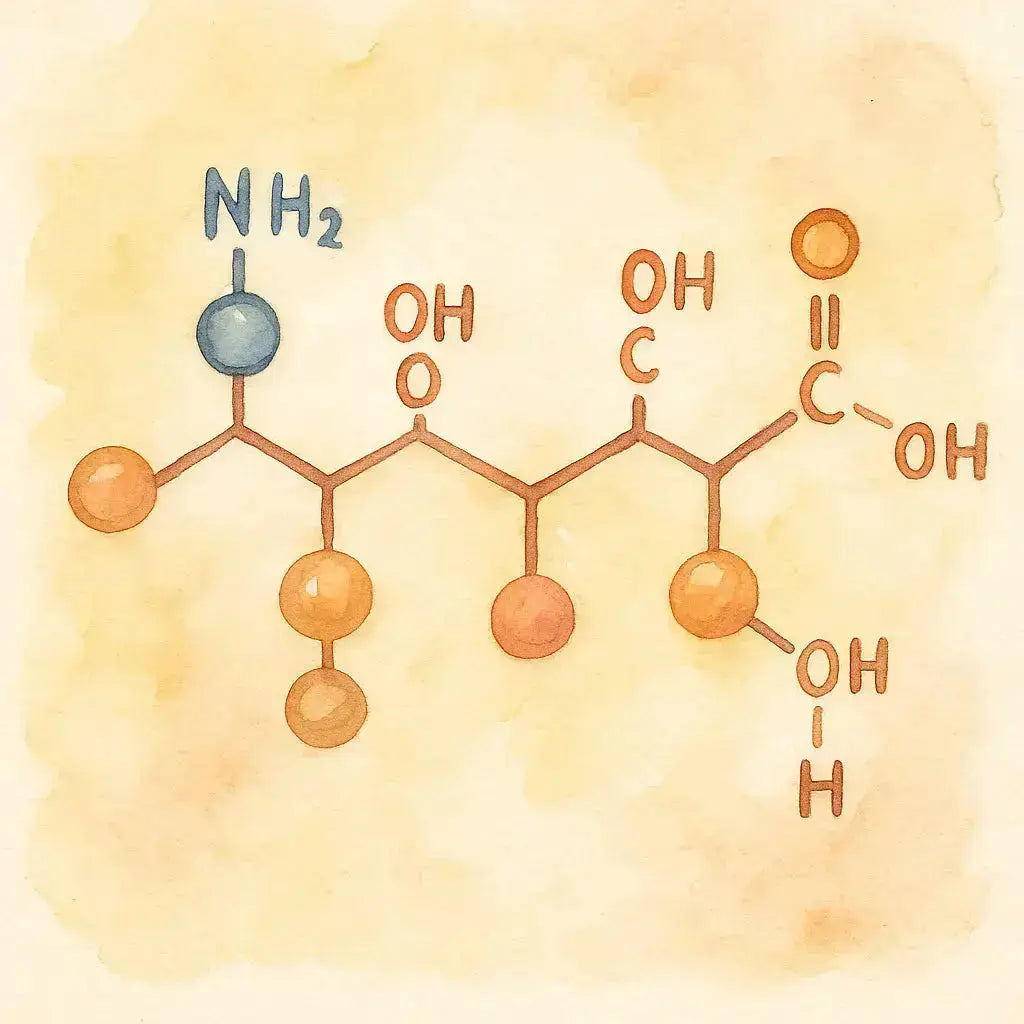
In its simplest definition, a peptide is a short chain of amino acids, the fundamental building blocks of life. While a protein can be composed of thousands of amino acids folded into complex three-dimensional structures, a peptide is a much shorter and more precise sequence, typically 2 to 50 amino acids. This brevity is not a limitation, but rather its greatest strength.
Think of a protein as a complete, dense, and detailed novel. A peptide, on the other hand, is a text message: short, direct, and with a specific purpose. Both are written in the same language (amino acids), but their function is drastically different. The human body is a vast communication network, and peptides are the language cells use to instruct each other. When one cell needs another to divide, repair itself, release a hormone, or change its metabolism, it doesn't send a thesis; it sends a peptide.
The Mechanism of Action: From the Genetic Code to Cellular Function
The process of peptide creation and action is a masterpiece of biological efficiency. It begins in DNA, which contains the code for building precursor proteins. This code is transcribed into messenger RNA (mRNA), which is read by the cell's ribosomes. These ribosomes assemble long chains of amino acids, which are then processed by enzymes that cleave these chains into active, functional peptides. These peptides are packaged into vesicles and released from the cell in response to a specific signal, such as an electrical impulse.
Once in the bloodstream, the peptide travels throughout the body until it finds its corresponding receptor on the surface of a target cell. Each receptor is like a lock, and each peptide is a unique key. When the correct key fits the lock, the receptor changes shape, triggering a cascade of events within the cell. This process, known as signal transduction , converts an external signal into an internal cellular action, such as gene activation, protein synthesis, or the modulation of metabolic pathways.
The Physiology of Peptides: Why Size and Stability Matter
Physiology favors peptides as signaling molecules for several reasons. Large proteins can misfold, forming dysfunctional aggregates that can lead to disease (as in the case of Alzheimer's). Peptides, being short, avoid this problem. Their simple, linear structure makes them incredibly stable and straightforward in their function. They don't fold into complex, unstable shapes, ensuring that the signal is delivered clearly and without errors.
In essence, peptides are the operating system that commands biology. They are not the hardware (the mechanical machinery of the cell), but the software: tiny snippets of code that tell the system what to do, when to do it, and with what intensity. This elegance and efficiency is what is making them at the forefront of optimizing health and performance.
The Route of Administration: Why Injection Is the Only Viable Option
One of the biggest controversies and sources of misinformation in the world of peptides is the route of administration. The truth, supported by physiology, is unequivocal: oral peptides don't work. The reason is simple and brutal: the digestive system is designed to break down proteins and peptides.
The Stomach Acid Wall
The first obstacle is the hydrochloric acid in the stomach, an environment so corrosive that it denatures (unfolds) amino acid chains almost instantly. No matter how expensive the capsule or how "advanced" the delivery system, gastric acid has a single mission: to break down proteins into smaller fragments. A peptide, by definition, is a chain of amino acids, and it is instantly decomposed.
Enzymatic Dismantling
Even if a fragment miraculously survived stomach acid, it would face an army of digestive enzymes in the gut, such as pepsin, trypsin, and chymotrypsin. These enzymes are molecular "bond killers," designed to cut any remaining amino acid chain into its individual components or fragments of two or three amino acids. By the time they reach the intestinal wall, the original therapeutic peptide is gone. It's indistinguishable from the remains of the chicken breast you ate for lunch.
Some companies try to overcome this with chemical modifications like "pegylation" (adding polyethylene glycol, a petroleum-based polymer), but this not only distorts the peptide's shape, preventing it from fitting into its receptor, but also introduces a potentially toxic and inflammatory molecule into the body. It's like trying to fix a key by bending it further: it simply won't work. Increasing the dose doesn't solve the problem either; 10 times zero is still zero. The only way to guarantee that the peptide reaches the bloodstream intact is through subcutaneous injection, which completely bypasses the digestive system.
The Cascade Effect: Why Half-Life Isn't the Most Important Thing
Another common point of confusion is the obsession with a peptide's "half-life"—that is, how long it remains active in the bloodstream. While some peptides have a half-life of only a few minutes, this is irrelevant to their biological effect. The peptide is merely the initial messenger, the one that lights the fuse.
The real magic happens in the signaling cascade it triggers. A single binding of a peptide to its receptor can activate thousands of subsequent cellular events that last for hours or even days. Insulin, for example, has a half-life of minutes, but its effects on glucose metabolism last for hours. The goal of a peptide injection is not to keep the molecule in the body forever, but to deliver the signal. Once the biological cascade has begun, the body takes over and continues the process on its own. Moreover, unlike drugs, the body has built-in "brakes" for peptides through negative feedback loops, which prevent overstimulation and maintain homeostasis.
Peptides vs. Drugs: Surgical Precision vs. Brute Force
The fundamental difference between peptides and drugs lies in their philosophy of action:
- Peptides: They are native, endogenous software. The body doesn't see them as invaders, but as familiar signals. They work in harmony with existing feedback loops. The result is a clean, precise response without biological confusion. They are multicontextual; the same peptide can have different coordinated effects in different tissues, adapting to the system's needs.
- Drugs: They are external, exogenous software. They are foreign molecules designed to force a biological pathway. They often bypass the body's safety systems, leading to tolerance, dependence, and compensatory imbalances in other areas. Most are one-dimensional and lack the ability to adapt to the tissue context.
A peptide doesn't just solve a problem in one corner; its effects spread throughout the entire system, optimizing the whole machine. It's not a hammer looking for a nail; it's a complete set of tools that adapts to any repair needed.
The Power of Synergy: How Peptides Amplify Other Interventions
Peptides don't compete; they complement each other. Their true power is unleashed when stacked with other interventions, creating effects that are exponential, not merely additive.
- With TRT (Testosterone Replacement Therapy): TRT provides the "fuel." Peptides like CJC-1295 and Ipamorelin "ignite the engine" of growth hormone. Together, they become a "metabolic torch" that burns fat, builds muscle, and accelerates recovery.
- With SARMs: SARMs boost muscle growth (hypertrophy), but they don't strengthen connective tissue. Stacking them with repair peptides like BPC-157 or TB-500 not only adds muscle mass but also "shields the chassis," preventing injuries.
- With Stem Cells: Stem cells need a favorable environment to thrive. If injected into an inflamed and dysfunctional body, they fail. Peptides like GHK-Cu and TB-500 create that "fertile ground," increasing blood flow, reducing inflammation, and preparing the tissue for regeneration.
The return on investment isn't 1+1=2. It's 1+1=20. Peptides amplify the fundamentals: training is more effective, diet produces better results, injury recovery is drastically shortened, and aging is slowed at the cellular level.
Cycles and Strategies: Intelligent Use for Sustainable Results
Not all peptides are created equal, nor should they all be used in the same way. A smart approach involves distinguishing between "base" peptides and those that need to be "cyclized."
- Daily Use Peptides (Base): Systemic and repair compounds such as BPC-157, TB-500, and GHK-Cu can, hypothetically, be used continuously as part of a maintenance and resilience protocol.
- Cycling Peptides: Those with potent effects on the hormonal axis, such as growth hormone secretagogues (CJC-1295, Ipamorelin) or immune modulators (Thymolin Alpha 1), must be used in cycles (e.g., 5 days on, 2 days off, or for periods of several weeks followed by a break) to avoid receptor desensitization. This is analogous to periodized training in sports.
Peptides vs. Stem Cells: The Seed and the Terrain
Stem cells are incredibly powerful, but their effectiveness is limited without the right environment. They're like a high-yield seed. Peptides are the fertile soil, water, sunlight, and fertilizer. Without peptides to create an anti-inflammatory, well-vascularized, and repair-promoting environment, stem cells are like seeds planted in concrete. For extreme trauma and advanced degenerative diseases, stem cells are a valuable tool, but for everyday performance, recovery, repair, and anti-aging, peptides outperform stem cells in precision, control, and cost-effectiveness.
Conclusion: The Future of Human Biology
Peptides are not a "trick" or a "shortcut." They are the manifestation of a deeper understanding of human biology. They represent a paradigm shift: from forced suppression to intelligent amplification; from exogenous intervention to endogenous restoration. They don't fight against biology; they enhance it. The body cannot distinguish between a peptide it produces on its own and one that is injected, because they are identical. Receptors cannot lie. The results are clean, synergistic, and often transformative.
When you understand the language of peptides, you stop playing defense against injury, aging, and dysfunction. You start playing offense. It's not "cheating"; it's the future of being an optimized, resilient human being. It's time to let go of pharmaceutical dogma and embrace the power of your own body's native code.