
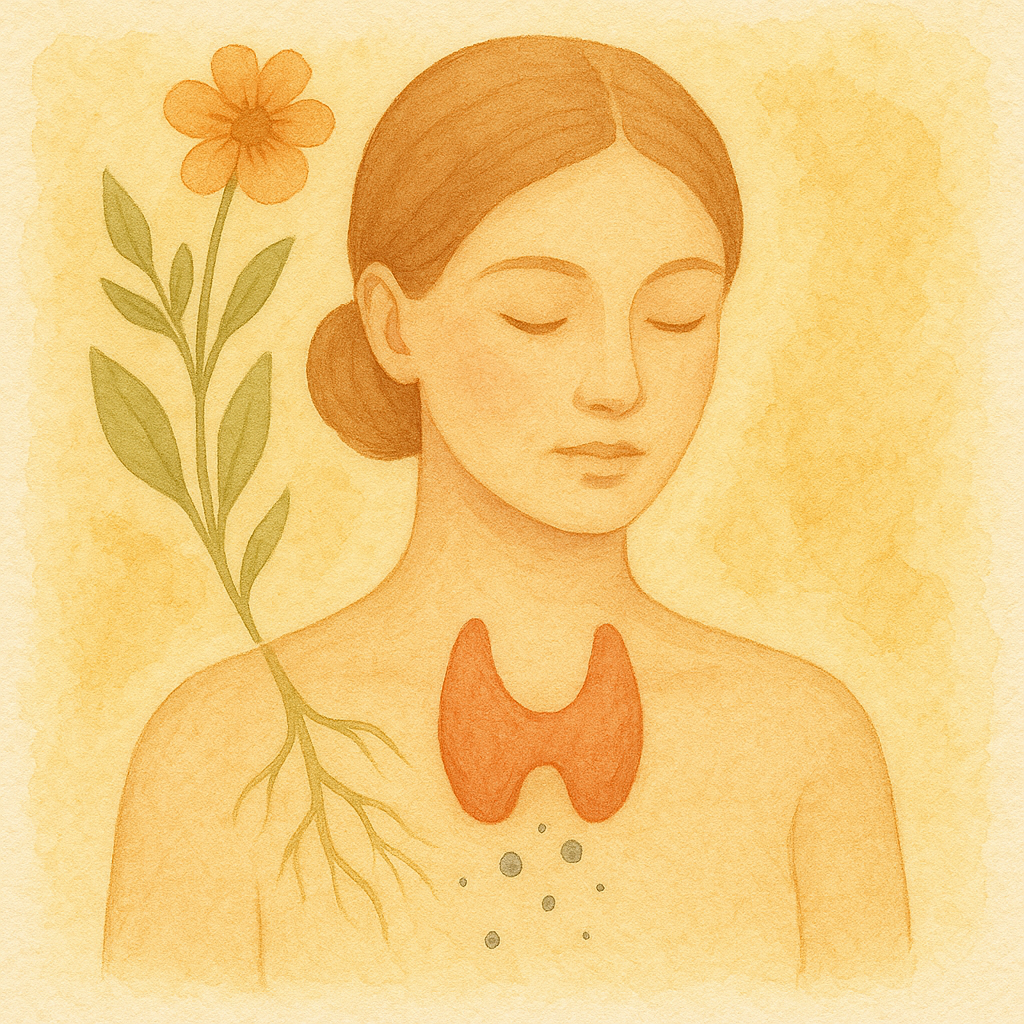
PROTOCOL FOR HYPOTHYROIDISM
This protocol seeks to restore thyroid balance, stimulate the natural production of thyroid hormones, improve the conversion of T4 to T3, and reduce associated symptoms (fatigue, weight gain, constant cold, slow metabolism).
PHASE 1: THYROID STIMULATION (Weeks 1 to 4)
Objectives: To improve the natural production of thyroid hormones and correct key deficiencies.
1. Lugol's 5% solution
The iodine and iodide present in Lugol's solution are essential for the synthesis of T4 (thyroxine) and T3 (triiodothyronine). The thyroid gland actively uses iodide, taken up by the sodium-iodide symporter (NIS), to incorporate iodine into the tyrosine residues that form part of thyroglobulin, resulting in thyroid hormones. Iodine deficiency is one of the most common causes of hypothyroidism worldwide, even in subclinical forms. Furthermore, iodide supplementation protects the gland from the toxic accumulation of peroxides generated during iodine organification.
2. Essential Minerals (Zinc, Selenium, Magnesium)
- Zinc : Activates the 5'-deiodinase enzyme, which converts inactive T4 into active T3. Zinc deficiency can lead to low conversion and elevated TSH.
- Selenium : An essential cofactor of type I and II deiodinases, responsible for the peripheral conversion of T4 to T3. It is also part of antioxidant enzymes (such as glutathione peroxidase) that protect the thyroid from oxidative damage during hormone synthesis.
- Magnesium : Essential in hundreds of enzymatic reactions, including those that regulate the production and transport of thyroid hormones. Magnesium deficiency can worsen thyroid resistance at the cellular level.
3. L-Tyrosine
Tyrosine is an amino acid direct precursor to thyroid hormones. In the synthesis process, the enzyme thyroperoxidase (TPO) catalyzes the binding of iodine to the tyrosine residues of thyroglobulin, forming monoiodotyrosine (MIT) and diiodotyrosine (DIT), immediate precursors of T3 and T4. Supplementation is especially useful in situations of chronic exhaustion, prolonged stress, or protein-deficient diets.
4. Ashwagandha (Standardized extract to 5% withanolides)
Ashwagandha is an adaptogen capable of reducing cortisol levels, which, if chronically elevated, can inhibit the function of the hypothalamic-pituitary-thyroid (HPT) axis. Clinical studies have shown that Ashwagandha can increase T3 and T4 levels in people with subclinical hypothyroidism. It also improves the sensitivity of receptors to thyroid hormones, thus enhancing their physiological action.
PHASE 2: OPTIMIZATION AND ACTIVATION (Weeks 5 to 8)
Objectives: To promote the conversion of T4 to T3 and improve tissue sensitivity to thyroid hormones.
1. Lugol 5% (at higher therapeutic doses)
In this phase, the goal is to adequately saturate the thyroid with iodine/iodide to maintain sustained hormone synthesis. At therapeutic doses, it can also have antiseptic and chelating effects on toxic halogens (such as fluoride and bromide), which compete with iodine at the NIS receptor. This detoxification improves the uptake and utilization of functional iodine.
2. Additional Selenium (200mcg)
Although selenium is already present in essential minerals, targeted supplementation further enhances the conversion of T4 to T3 in the liver and kidneys. This is especially relevant when the iodine dose is increased, as selenium prevents the excessive generation of peroxidyl free radicals during iodide oxidation, protecting the thyroid from oxidative damage induced by the treatment itself.
3. N-Acetylcysteine (NAC)
NAC is a direct precursor to glutathione, the master intracellular antioxidant. In the thyroid context, glutathione is essential for preventing autoimmune damage and neutralizing the oxidative stress generated by the gland's peroxidase activity. Furthermore, it supports liver health by promoting the conversion of T4 to T3 in the liver, the primary site of this transformation.
4. B Complex (B-Active)
Vitamins B2, B6, B9, and B12 are essential for energy metabolism, neurotransmitter production, and methylation—processes that also impact thyroid function. Vitamin B2 (riboflavin) acts as an enzyme cofactor for TPO. B6 improves T3 sensitivity. B12 and folate are crucial for preventing fatigue, depression, and cognitive symptoms common in hypothyroidism. Furthermore, they optimize mitochondrial function and reduce homocysteine, a frequent inflammatory marker in thyroid dysfunction.
PHASE 3: CONSOLIDATION AND MAINTENANCE (Week 9 onwards)
Objectives: To maintain long-term thyroid function, prevent relapses, and strengthen the immune system.
1. Lugol 5% (maintenance dose)
Once saturation and balance are achieved, maintaining a constant dose helps prevent long-term chronic iodine deficiencies, ensures stable hormone production, and supports the detoxification of toxic environmental halogens. This dose also acts preventively against autoimmune thyroid diseases.
2. Essential Minerals
Maintaining a regular intake of zinc, magnesium, and selenium is key to preserving hormonal balance, ensuring proper conversion of T4 to T3, and preventing relapses caused by new deficiencies. They also help maintain optimal mitochondrial and energy function, essential for patients who still experience residual fatigue.
3. Ashwagandha
Its chronic use contributes to the regulation of the HPT (hypothalamic-pituitary-thyroid) axis and the HPA (hypothalamic-pituitary-adrenal) axis, maintaining low cortisol levels, reducing chronic stress, and stabilizing the immune response. This is especially important in hypothyroidism of autoimmune origin, such as Hashimoto's thyroiditis, where oxidative stress and inflammation are key factors.
4. Vitamin D3 with K2
Vitamin D regulates more than 200 genes involved in the immune response. Low levels are associated with autoimmune hypothyroidism, especially in Hashimoto's thyroiditis. It works by reducing the production of pro-inflammatory cytokines (IL-6, TNF-α) and promoting a balance of regulatory T lymphocytes. Adding vitamin K2 is key to preventing vascular calcification caused by chronic vitamin D3 supplementation, ensuring that calcium is directed to bones and not soft tissues.
FULL PROGRAM
Complete protocol divided into phases with daily schedule and compatibilities
🔵 PHASE 1 – THYROID STIMULATION (Weeks 1 to 4)
Objective: To activate the natural production of T4 and T3, cover mineral deficiencies and prepare the neuroendocrine axis.
🕗 MORNING (ON AN EMPTY STOMACH)
-
L-Tyrosine – 1 capsule (600mg)
➤ Take with water upon waking. Wait 30 minutes before eating. -
Lugol 5% – 1 drop diluted in water, with breakfast
➤ Gradually increase to 4-5 drops after the second week if well tolerated.
🍽️ BREAKFAST
- Essential Minerals – 1 capsule
- Ashwagandha – 1 capsule (600mg)
🍽️ LUNCH
- Essential Minerals – 1 capsule
🌙 DINNER
- Ashwagandha – 1 capsule (600mg)
📆 Week 2 onwards:
- L-Tyrosine – 2 capsules together (1200mg), keep on an empty stomach.
- Essential Minerals – 3 capsules together with your main meal.
🔵 PHASE 2 – OPTIMIZATION AND ACTIVATION (Weeks 5 to 8)
Objective: To increase the conversion of T4 to T3, reduce inflammation, and activate cellular sensitivity to thyroid hormones.
🕗 MORNING (ON AN EMPTY STOMACH)
- L-Tyrosine – 2 capsules
- NAC – 1 capsule (600mg), 30 minutes after tyrosine
- Lugol 5% – 6 to 8 drops diluted in water, with breakfast
🍽️ BREAKFAST
- B-Active Complex – 1 capsule
- Additional Selenium – 200mcg
- Ashwagandha – 1 capsule
🍽️ LUNCH
- Essential Minerals – 3 capsules
- B-Active Complex – 1 capsule
🌙 NIGHT (BEFORE DINNER OR BEFORE SLEEPING)
- NAC – 1 capsule (600mg), at least 2 hours after dinner
📆 Duration: 4 weeks. It is recommended to have thyroid checks at the end of this phase.
🔵 PHASE 3 – CONSOLIDATION AND MAINTENANCE (Week 9 onwards)
Objective: To maintain optimal thyroid function, prevent relapses, and improve overall vitality.
🕗 MORNING (ON AN EMPTY STOMACH)
- L-Tyrosine – 1 or 2 capsules depending on progress
- Lugol 5% – 6 to 8 drops diluted in water, with breakfast
🍽️ LUNCH
- Essential Minerals – 3 capsules
- Vitamin D3 + K2 – 1 capsule (5000 IU + K2), take with fatty foods
- Ashwagandha – 1 capsule (600mg)
🌙 DINNER
- Ashwagandha – 1 capsule (600mg)
📆 Duration: Indefinite, depending on clinical analysis. May be maintained as a long-term thyroid support protocol.
🟢 GENERAL RECOMMENDATIONS AND PRECAUTIONS
Hormonal monitoring: Perform tests every 8-12 weeks (TSH, Free T4, Free T3) for precise protocol adjustments.
Symptom control: Adjust the dose, especially of Lugol, based on individual tolerance and clinical evolution.
Recommended key nutritional cofactors:
- Liposomal vitamin C: Enhances iodine absorption and utilization, protects against oxidative stress.
- Alpha-Lipoic Acid (ALA): Improves mitochondrial efficiency, optimizes cellular energy especially in cases of chronic hypothyroidism.
- Hyaluronic Acid: It can improve associated symptoms (dry skin and hair), thus improving overall quality of life.
- C15 (Pentadecanoic Acid): Powerful metabolic regulator, natural anti-inflammatory similar to omega-3, beneficial in thyroid pathologies.
Recommended diet: Prioritize foods rich in iodine (seaweed, fish, shellfish). Avoid unfermented soy, gluten (in confirmed autoimmune cases), refined sugars, hydrogenated fats, and ultra-processed foods.
Considerations regarding Lugol's solution: Always start slowly with a low dose, monitoring for possible reactions (headache, irritability, anxiety, palpitations). It is always recommended to supplement with selenium to protect and optimize results with Lugol's solution.
⚠️ KEY RECOMMENDATIONS
- Avoid taking Lugol's solution with dairy products or iron/calcium-rich supplements.
- Separate NAC from meals at least 1 hour before or 2 hours after.
- Tyrosine should always be taken on an empty stomach.
- Check thyroid function (TSH, free T4, free T3) before and after the protocol.
- Do not suddenly discontinue Lugol if high doses have already been reached; reduce gradually if you wish to pause.
- Increase your intake of water and unrefined sea salt to balance iodine metabolism.