
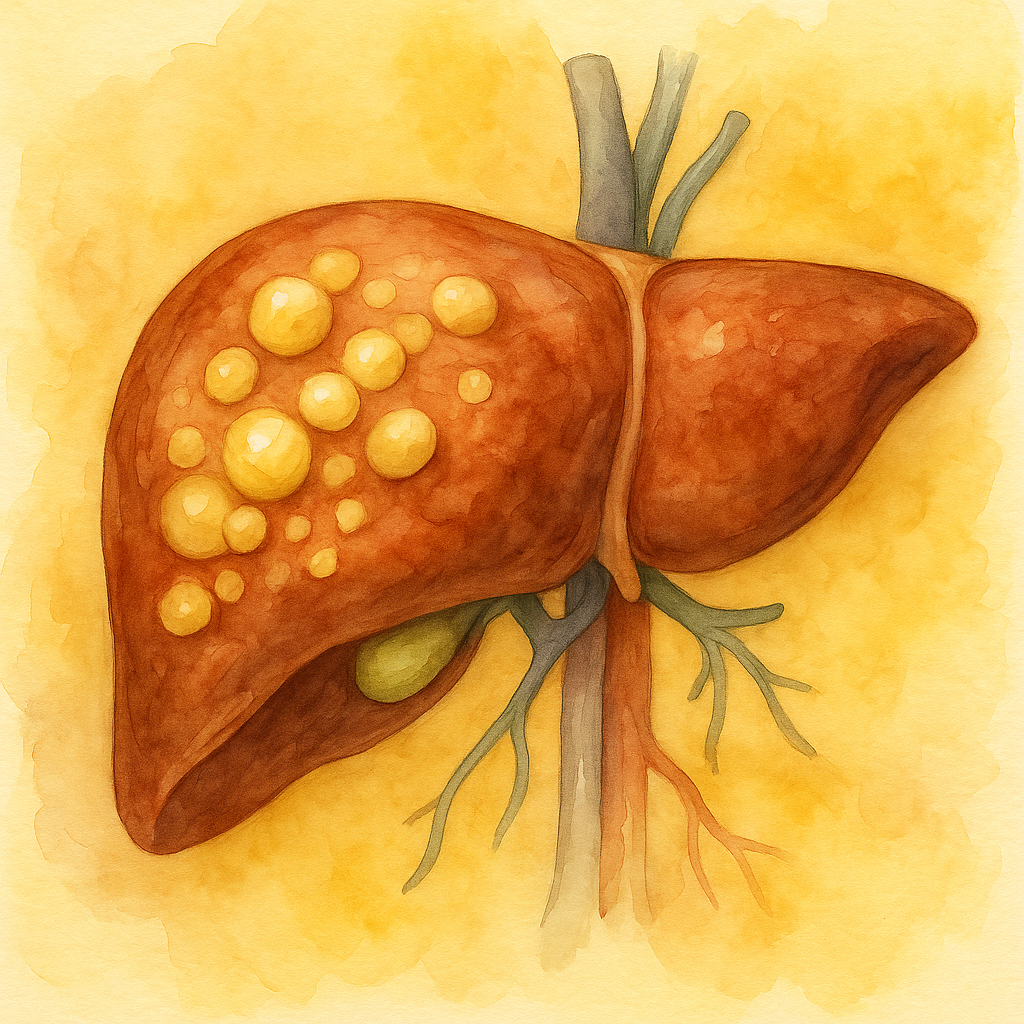
Complete Protocol for Fatty Liver
Comprehensive treatment with TUDCA as the main element for liver regeneration and management of non-alcoholic fatty liver disease
Main Supplements to the Protocol
TUDCA (Tauroursodeoxycholic Acid) - 250 mg
Function: Main hepatoprotective agent and facilitator of liver regeneration
Silymarin 80% - 400 mg
Function: Liver antioxidant and cell membrane stabilizer
NAC (N-acetylcysteine) - 600 mg
Function: Glutathione precursor and detoxifying agent
Specific Scientific Support
TUDCA - The Central Agent
TUDCA acts specifically against fatty liver through three critical mechanisms: reducing endoplasmic reticulum stress , which characterizes lipid-overloaded hepatocytes; modulating apoptosis , preventing the massive cell death that progresses to fibrosis; and improving bile flow, facilitating the elimination of accumulated toxins and lipid metabolites. Its unique ability to cross the blood-brain barrier also reduces neuroinflammation associated with fatty liver.
Silymarin - Targeted Antioxidant Protection
Silymarin combats fatty liver disease by acting on lipid peroxidation , the process that damages the membranes of fat-laden hepatocytes. Its active component, silibinin, specifically inhibits collagen synthesis, preventing progression to liver fibrosis, while stimulating protein synthesis for the regeneration of functional hepatocytes.
NAC - Antioxidant System Restoration
In fatty liver, glutathione levels are critically reduced. NAC acts as a direct precursor to glutathione , restoring hepatic antioxidant capacity. Furthermore, it improves insulin sensitivity in the liver, reducing de novo lipogenesis and facilitating beta-oxidation of accumulated fatty acids.
Synergy of the Compounds
This protocol functions as an integrated, three-tiered system : TUDCA acts as the "conductor," restoring basic cellular function and bile flow, while silymarin provides the "protective shield" against ongoing oxidative damage. NAC acts as the "cleaning engine," replenishing the liver's internal antioxidant systems.
The combination is synergistic because they address different aspects of the same problem : TUDCA repairs existing cellular damage, silymarin prevents further damage, and NAC restores the body's natural defense mechanisms. Together, they create a liver environment conducive to regeneration while preventing further damage.
Protocol Phases
Phase 1: Stabilization and Detoxification (Weeks 1-4)
Objective: To reduce acute liver inflammation and initiate detoxification
TUDCA: 250 mg once a day (morning)
Silymarin: 400 mg twice a day (morning and night)
NAC: 600 mg once a day (morning, on an empty stomach)
Phase 2: Intensive Repair (Weeks 5-12)
Objective: To maximize liver regeneration and optimize function
TUDCA: 250 mg twice a day (morning and evening)
Silymarin: 400 mg twice a day (morning and night)
NAC: 600 mg twice a day (morning and evening)
Phase 3: Maintenance and Consolidation (Weeks 13-24)
Objective: To maintain the improvements achieved and prevent relapses
TUDCA: 250 mg once a day (morning)
Silymarin: 400 mg once a day (night)
NAC: 600 mg every other day (morning)
Daily Management Program
Morning Routine (7:00-8:00 AM)
On an empty stomach (30 minutes before breakfast):
• NAC 600 mg with a large glass of water
With breakfast:
• TUDCA 250 mg (Phases 1 and 3) or first dose (Phase 2)
• Silymarin 400 mg with fatty foods for better absorption
Afternoon Routine (2:00-3:00 PM)
Only in Phase 2:
• TUDCA 250 mg with lunch
• NAC 600 mg (30 minutes before lunch if possible)
Nighttime Routine (8:00-9:00 PM)
With dinner (Phases 1 and 2):
• Silymarin 400 mg with food
Phase 3:
• Only Silymarin 400 mg with dinner
Compatibility between Supplements
Safe Combinations:
- TUDCA + Silymarin: Excellent synergy, can be taken together
- NAC + TUDCA: Compatible, separate for 30 minutes to optimize absorption
- Silymarin + NAC: Fully compatible, they enhance each other
Timing Considerations:
- NAC is best absorbed on an empty stomach
- TUDCA and Silymarin require food for optimal absorption
- Avoid taking NAC with dairy products (they can reduce absorption)
Advanced Optional Supplements
Alpha lipoic acid (RS-ALA) - 500 mg
For cases of marked insulin resistance. Take on an empty stomach, one hour before the TUDCA.
Berberine HCL 98% - 500 mg
To optimize glucose and lipid metabolism. Take with main meals.
Curcumin 98% + piperine - 600 mg
To enhance the anti-inflammatory action. Take with fatty foods, separated from NAC by 2 hours.
Lifestyle Recommendations
Specific Diet for Fatty Liver
- Completely eliminate: Added fructose, corn syrup, sugary drinks, and alcohol
- Reduce refined carbohydrates: White bread, pasta, white rice (maximum 100g/day)
- Increase protein: 1.2-1.5g per kg of body weight, prioritizing fatty fish, eggs, and lean meats
- Beneficial fats: Extra virgin olive oil, avocado, walnuts, omega-3 from fish
- Cruciferous vegetables: Broccoli, cauliflower, kale (minimum 3 servings daily)
- Intermittent fasting: 8-10 hour eating window to optimize hepatic autophagy
Therapeutic Physical Activity
- Aerobic exercise: 150 minutes per week of moderate intensity (brisk walking, cycling)
- Resistance training: 2-3 weekly sessions to improve insulin sensitivity
- Post-meal activity: Walk for 10-15 minutes after each main meal
- Avoid intense exercise: During the first 4 weeks to avoid overloading the liver
Optimizing Rest
- Regular schedule: Sleep between 10:00-11:00 PM and wake up between 6:00-7:00 AM
- Duration: 7-9 hours of quality sleep to optimize nighttime liver regeneration
- Environment: Completely dark room, temperature 18-20°C
- Last meal: 3 hours before bedtime to avoid interfering with nighttime detoxification
Stress Management
- Breathing techniques: 10 minutes of diaphragmatic breathing daily
- Meditation or mindfulness: 15-20 minutes daily, preferably in the morning
- Contact with nature: Minimum 20 minutes outdoors daily
- Limit screen time: Avoid devices 2 hours before bed
Warnings and Contraindications
Absolute Contraindications
- Complete biliary obstruction: TUDCA may worsen the condition
- Pregnancy and breastfeeding: Safety not established for TUDCA at therapeutic doses
- Known allergy: To any of the components of the protocol
- Severe renal impairment: NAC requires dose adjustment
Important Precautions
- Anticoagulant medications: NAC may potentiate the effect; monitor INR.
- Diabetes: Monitor glucose, especially when adding berberine
- Hypotension: Silymarin may slightly lower blood pressure
- Small gallstones: The TUDCA can mobilize them; perform a prior ultrasound.
Possible Side Effects
- TUDCA: Mild initial diarrhea (first week), minor nausea
- NAC: Gastrointestinal discomfort, temporary metallic body odor
- Silymarin: Occasionally mild headache or digestive discomfort
Recommended Monitoring
- Week 0: ALT, AST, GGT, bilirubin, complete lipid profile
- Week 4: Repeat liver enzymes and bilirubin
- Week 8: Complete evaluation including liver ultrasound
- Week 16: Complete profile and continuity assessment
Consult a doctor immediately if you experience: severe abdominal pain, jaundice, very dark urine, very light stools, persistent nausea, or vomiting.
Total Duration of the Protocol
The complete protocol lasts 24 weeks (6 months) , with a mandatory medical evaluation at week 12 to determine continuation to the maintenance phase. Patients with significant improvement may continue with a long-term maintenance protocol at reduced doses.