Table of Contents
- Introduction: The Invisible Threat That Surrounds Us
- What are Forever Chemicals (PFAS)?
- The Silent Infiltration: PFAS in Everyday Products
- Health Hazards: A Long List of Diseases
- Environmental Pollution: A Global Crisis
- What Can We Do? Steps to Protect Ourselves
- Conclusion: A Call to Action
Introduction: The Invisible Threat That Surrounds Us
At the heart of our modern lives, in the products we use every day without a second thought, lurks an invisible and persistent threat: "forever chemicals." Scientifically known as perfluoroalkyl and polyfluoroalkyl substances (PFAS) , these synthetic compounds have infiltrated every corner of our planet and our bodies, creating a public health crisis of alarming proportions.
From the dental floss we use for oral hygiene to the clothes we wear and the packaging of our food, PFAS are ubiquitous. Their ability to repel water and grease has made them a miracle ingredient for industry, but their resistance to degradation has made them a nightmare for the environment and human health. They don't break down; they accumulate, and the effects of this accumulation are devastating.
This article is not a simple warning, but a detailed, evidence-based exposé of the PFAS crisis. We will explore what these chemicals are, why they are so dangerous, how they have come to contaminate our world so profoundly, and what we can do to protect ourselves from this invisible yet pervasive threat.
What are Forever Chemicals (PFAS)?
PFAS are a family of more than 4,700 synthetic chemical compounds that share a defining characteristic: an extremely strong carbon-fluorine bond, one of the strongest in organic chemistry [1] . This bond is the reason why PFAS are so resistant to heat, water, and oil, but it is also the reason why they are so incredibly persistent in the environment.
First manufactured in the 1940s , the two best-known and most studied types of PFAS are perfluorooctanoic acid (PFOA) and perfluorooctane sulfonate (PFOS) [1] . Although the production of these two compounds has been largely phased out in the United States, the PFAS family continues to grow, and many of the newer compounds have similar properties and risks.
The persistence of PFAS is so extreme that they have been nicknamed "forever chemicals." They do not degrade in the environment and can remain in soil and water for decades, if not centuries [2] . This persistence, combined with their widespread use, has led to global contamination that affects all living things on the planet.
The Silent Infiltration: PFAS in Everyday Products
The omnipresence of PFAS in our daily lives is staggering and deeply concerning. These chemicals are found in a wide range of consumer products, often without consumers being aware of their presence.
Dental Floss: A Danger in Your Hygiene Routine
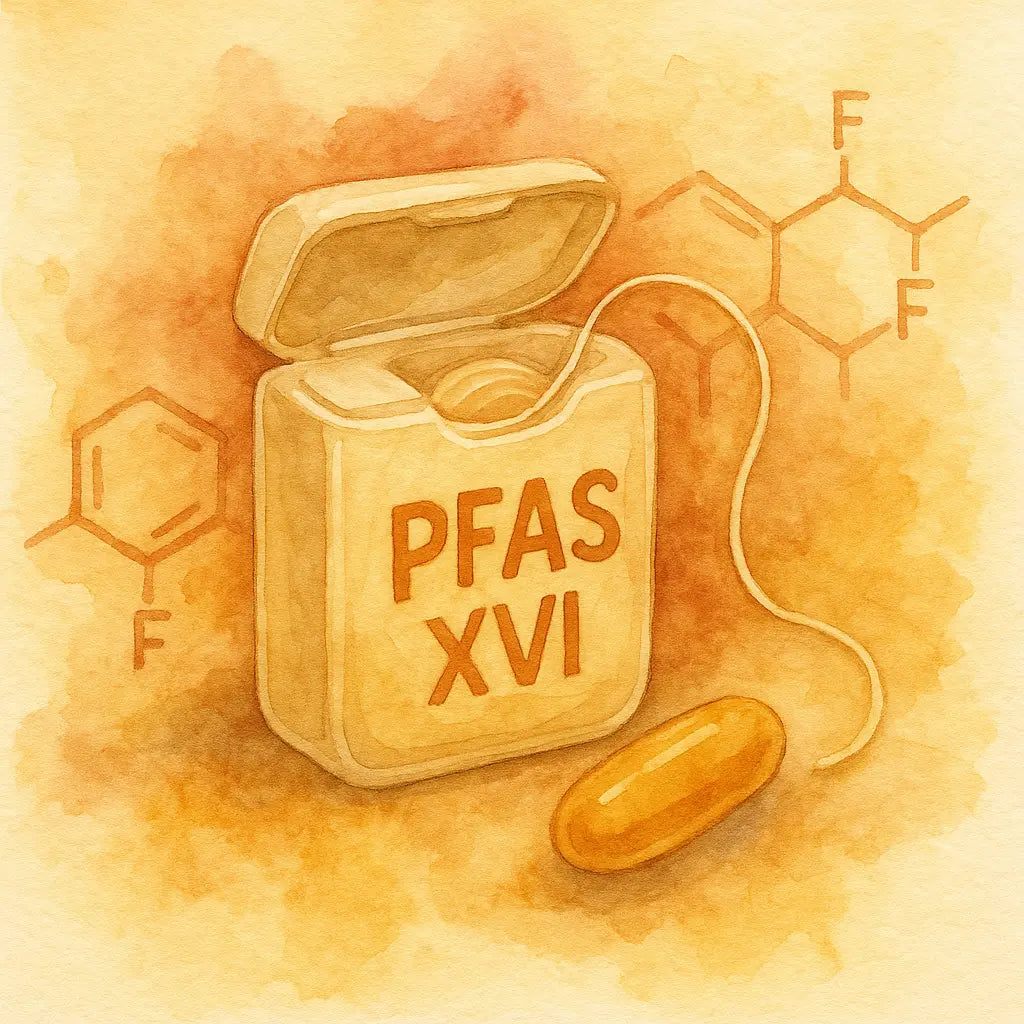
Perhaps one of the most striking examples of PFAS infiltration into our daily lives is its presence in dental floss. Many dental flosses are coated with PFAS compounds, such as polytetrafluoroethylene (PTFE) , to make them slide more easily between teeth [3] . The problem is that this coating is not inert.
Studies have shown that using dental floss containing PFAS can significantly increase levels of these chemicals in the blood [3] . Direct contact with the oral mucosa allows PFAS to be absorbed directly into the bloodstream, bypassing the digestive system and accumulating in the body over time. This means that every time we use dental floss with PFAS, we are voluntarily introducing a toxic chemical into our bodies.
"Some dental flosses contain PFAS to improve their glide between our teeth. The consequence is that these chemicals can penetrate our body through contact with the mucous membranes of the mouth and accumulate over time." - Promis Care [3]
To identify dental floss containing PFAS, we should avoid flosses that list PTFE or Teflon and nylon on the label [3] . People who use Teflon-coated dental floss have been shown to have higher concentrations of PFAS in their blood.
Cosmetics and Personal Care Products: Beauty at a Toxic Cost
The cosmetics industry is another major user of PFAS. These chemicals are used in a wide variety of products to improve their durability, water resistance, and texture. A 2021 study found PFAS in more than half of the 231 makeup and personal care products tested in the United States and Canada [4] .
The statistics are alarming: 63% of foundations, 55% of lip products, and 62% of lipsticks contain PFAS [4] . Products most likely to contain PFAS include foundations, liquid lipsticks, waterproof mascaras, and hair products.
The presence of PFAS in these products is particularly concerning because they are applied directly to the skin, lips, and eyes—areas where absorption is high. Furthermore, many of these products are used daily, resulting in constant and cumulative exposure.
Clothing and Textiles: The Stain Resistance Trap
Clothing and textiles are another major source of PFAS exposure. These chemicals are used to treat fabrics and make them water and stain resistant. Data show that 50–53% are used in household textiles and 34–39% in clothing and apparel [5] . Polymeric PFAS constitute more than 75% of PFAS in textile products.
From waterproof coats to carpets and upholstery, PFAS are used to improve the durability and ease of cleaning of a wide range of textile products. The problem is that PFAS don't stay in the textiles. They are released into the environment through normal wear and washing, polluting the water and air.
When clothes containing PFAS are washed, some chemicals leach into the wash water that is discharged from the home into the wastewater system, contributing to environmental pollution [5] . They can also be absorbed through the skin, especially in the case of clothing that is in direct contact with the body.
Food Packaging: The Poison on Our Plate
Food packaging is another major source of PFAS exposure. These chemicals are used to coat paper and cardboard, making them grease- and water-resistant. One study identified that 43% of food and beverage packaging contains PFAS [6] , causing harm to human health and the environment.
Pizza boxes, disposable cups and plates, popcorn bags, fast food wrappers, tuna cans, canned goods, and many other types of food packaging contain PFAS. When hot water or hot, greasy foods come into contact with these containers, the PFAS migrate into the food and are ingested. This is a particularly concerning route of exposure because it introduces PFAS directly into our digestive system, where they can be absorbed and accumulate in the body.
Health Hazards: A Long List of Diseases
The scientific evidence on the health dangers of PFAS is overwhelming and continues to grow. Exposure to these chemicals has been linked to a wide range of health problems, from cancer to hormonal disorders and developmental issues.
Cancer: The Deadly Connection
Exposure to PFAS has been linked to an increased risk of several types of cancer. The cancers with the strongest evidence of association with PFAS are testicular and kidney cancer [7] . There is also evidence suggesting an increased risk of liver, breast, and prostate cancer.
Specific studies have shown that a higher incidence and mortality of kidney cancer has been observed among individuals with high exposures to PFOA [7] . PFAS have been generically classified as a possible carcinogen, although not officially.
The mechanism by which PFAS may cause cancer is not fully understood, but it is believed to be related to their ability to damage DNA, alter cell function, and suppress the immune system.
Immune System: A Weakened Defense
PFAS can have a devastating effect on the immune system. The CDC and ATSDR acknowledge that exposure to high levels of PFAS could impair the immune system [8] . Exposure to these chemicals has been linked to reduced vaccine response, increased susceptibility to infections, and a higher risk of autoimmune diseases.
Specific effects include:
- Suppression of antibody production
- Decreased response to vaccines in children and adults
- Reduced immune response to infections
- Increased risk of recurrent illnesses with more severe symptoms
"There is strong evidence that exposure to PFAS can suppress the immune system's ability to produce antibodies in response to vaccines." - PFAS Exchange [9]
This effect is particularly concerning in children, whose immune systems are still developing. Exposure to PFAS during childhood can have lasting effects on immune health.
Endocrine System: A Hormonal Imbalance
PFAS are endocrine disruptors, meaning they can interfere with the body's hormonal system. Exposure to these chemicals has been linked to a number of hormonal problems, including thyroid disease, fertility problems, and impaired sexual development [10] .
Specific effects include:
- Thyroid hormone disturbance (especially PFOS)
- Autoimmune disorders related to the thyroid
- Hashimoto's thyroiditis
- Graves' disease
- General hormonal imbalance
This effect is particularly concerning during pregnancy and fetal development. Exposure to PFAS during these critical periods can have profound and lasting effects on the child's health.
Development and Reproduction: A Threat to Future Generations
Exposure to PFAS during pregnancy has been linked to a number of developmental problems in children. Studies reveal that PFAS exposure in pregnant women can increase the risk of gestational diabetes and decrease fertility [11] .
Specific effects on pregnancy include:
- Low birth weight
- Gestational diabetes
- Decreased fertility
- Pregnancies with adverse outcomes
- Increased risk of diseases in the fetus
Researchers suspect that PFAS affect female fertility by wreaking havoc on reproductive hormones [12] . They have also been linked to fertility problems in both men and women.
This effect is particularly alarming because it means that the dangers of PFAS are not limited to the exposed individual, but can be passed on to future generations.
Environmental Pollution: A Global Crisis
The persistence and widespread use of PFAS have led to environmental contamination on a global scale. These chemicals have been found in water, soil, and air worldwide, from industrial areas to the most remote regions of the Arctic.
Water Pollution: A Vital Resource in Danger
Water contamination is one of the major concerns related to PFAS. PFAS can be released into the air, soil, and water, including drinking water sources [1] . These chemicals can leach into groundwater and surface water from landfills, industrial plants, and areas where PFAS-containing firefighting foams have been used.
The main sources of pollution include:
- Industrial production plants
- Landfills
- Wastewater treatment plants
- Firefighter training centers
- Airports and military bases
Once in water, they are extremely difficult to remove. Contamination of drinking water with PFAS is a serious problem in many communities worldwide. Exposure to contaminated drinking water is one of the main routes of PFAS exposure for many people.
Bioaccumulation: The Growing Threat in the Food Chain
PFAS bioaccumulate in living organisms, meaning they become more concentrated as they move up the food chain. Because of their tendency to bioaccumulate, even extremely low or undetectable concentrations of PFAS in the environment can pose risks [13] .
This means that top predators, such as large fish, birds of prey, and humans, can have very high levels of PFAS in their bodies, even if levels in the environment are low.
Food contamination occurs through:
- Vegetables grown in contaminated soil
- Fish from polluted waters
- Meat and eggs from exposed animals
- Milk products
- Bioaccumulation throughout the food chain
Bioaccumulation is particularly concerning in the case of PFAS because they are so persistent. Once they enter the body, they remain there for years, accumulating over time and increasing the risk of health problems.
What Can We Do? Steps to Protect Ourselves
The PFAS crisis is a complex and systemic problem that requires large-scale action from governments and industry. However, there are also steps we can take as individuals to reduce our exposure to these hazardous chemicals.
Choose PFAS-Free Products
One of the most important things we can do is choose products that don't contain PFAS. This can be difficult, as PFAS aren't always listed on product labels. However, there are some things we can look for:
Dental floss: Look for dental floss that does not contain PTFE or Teflon. There are many natural alternatives available, such as silk or PLA (a bioplastic) floss. Check the label of your dental floss and verify its ingredients and materials. Avoid floss that list PTFE or Teflon and nylon on the label [3] .
Cosmetics: Look for brands that are committed to not using PFAS in their products. There are several online lists of PFAS-free cosmetic brands. Especially avoid products advertised as "long-lasting" or "waterproof."
Clothing and textiles: Avoid clothing and textiles marketed as "stain-resistant" or "waterproof" unless specifically stated to be PFAS-free. Look for natural materials such as cotton, wool, and linen.
Food containers: Avoid paper and cardboard food containers, especially those used for hot and greasy foods. Use glass, stainless steel, or ceramic containers to store and heat food.
Filter Drinking Water
If you are concerned about PFAS contamination of your drinking water, you can install a water filtration system in your home. Activated carbon filters and reverse osmosis systems are effective at removing PFAS from water [14] .
It is important to verify that the filtration system is specifically certified to remove PFAS, as not all filters are effective against these chemicals.
Support Regulation and Research
In addition to taking individual action, we can also support efforts to regulate PFAS and fund research into their health effects. We can contact our elected representatives and demand stronger action on PFAS.
We can also donate to organizations that work to raise awareness about the dangers of PFAS and advocate for stricter regulation. Public pressure is essential to driving the necessary regulatory change.
Conclusion: A Call to Action
The crisis of persistent chemicals is one of the greatest threats to public health of our time. The omnipresence of PFAS in our daily lives, combined with their persistence and toxicity, has created a situation in which we are all exposed to these hazardous chemicals.
The data is irrefutable: more than 4,700 synthetic chemical compounds that do not decompose, 63% of makeup bases contaminated , 43% of food packaging with PFAS , and a growing list of serious diseases associated with exposure, from cancer to infertility and suppression of the immune system.
The good news is that we are not helpless. By taking steps to reduce our exposure to PFAS and supporting efforts to regulate these chemicals, we can protect ourselves, our families, and our planet from the dangers of these everlasting chemicals.
The choice is ours: we can continue to ignore this silent crisis, or we can take action to create a healthier and safer future for everyone. Every product we choose, every vote we cast, and every conversation we have about this issue is an opportunity to make a difference.
The time to act is now. Perennial chemicals have had decades to infiltrate our world. It's time we take equally persistent action to protect our health and our planet from this invisible yet pervasive threat.
References
[1] United States Environmental Protection Agency (EPA). (2025). Basic information about PFAS. https://espanol.epa.gov/espanol/informacion-basica-sobre-pfas
[2] Agency for Toxic Substances and Disease Registry (ATSDR). Introduction to PFAS Chemicals. https://www.atsdr.cdc.gov/es/pfas/health-effects/general-information_1.html
[3] Promis Care. (2025). PFAS in dental care products. https://promiscare.com/pfas-en-productos-para-el-cuidado-dental/
[4] Critical Catalyst. (2021). PFAS – The Dangerous 'Eternal Chemicals' Used in Cosmetic Products. https://criticalcatalyst.com/es/pfas-los-peligrosos-quimicos-eternos-que-se-usan-en-productos-cosmeticos/
[5] European Environment Agency (EEA). (2024). PFAS in textiles in Europe's circular economy. https://www.eea.europa.eu/en/analysis/publications/pfas-in-textiles-in-europes-circular-economy
[6] The Food Tech. (2024). Study shows the implications of PFAS in food and beverage packaging. https://thefoodtech.com/insumos-para-empaque/estudio-muestra-la-implicacion-de-pfas-en-envases-de-alimentos-y-bebidas/
[7] National Cancer Institute (NCI). PFAS Exposure and Risk of Cancer. https://dceg.cancer.gov/research/what-we-study/pfas
[8] Centers for Disease Control and Prevention (CDC). Possible Health Effects of PFAS Chemicals. https://www.atsdr.cdc.gov/es/pfas/health-effects/index.html
[9] PFAS Exchange. PFAS and the immune system: What do we know? https://pfas-exchange.org/recursos/pfas-y-el-sistema-inmune-que-sabemos/?lang=es
[10] Justice Counts. (2025). What health problems do PFAS cause? https://justicecounts.com/es/responsabilidad-del-producto/health-problems-caused-by-pfas-chemicals/
[11] Columbia University. WHAT ARE PFAS CHEMICALS? https://www.obgyn.columbia.edu/file/23723/download?token=YFnTVX23
[12] Euronews. (2023). Can't get pregnant? PFAS in your household products could be the cause. https://es.euronews.com/salud/2023/03/24/no-consigue-quedarse-embarazada-las-pfas-de-sus-productos-domesticos-podrian-ser-la-causa
[13] ITRC. Human and Ecological Health Effects and Risk Assessment of PFAS. https://pfas-1.itrcweb.org/wp-content/uploads/2022/04/human_and_Eco_Health_2022-Spanish.pdf
[14] Boulder County. Health Risks of PFAS in Drinking Water. https://bouldercounty.gov/environment/water/pfas-espanol/