
Index
- 1. Introduction
- 2. The Role of the Liver in Metabolism and Weight Loss
- 3. Why You Can't Lose Weight Without a Healthy Liver
- 4. Common Causes of Liver Problems that Affect Weight
- 5. How to Support the Liver to Facilitate Weight Loss
- 6. Practical Advice, Diet and Lifestyle
- 7. Scientific Evidence and Explanations
- 8. Conclusion
1. Introduction
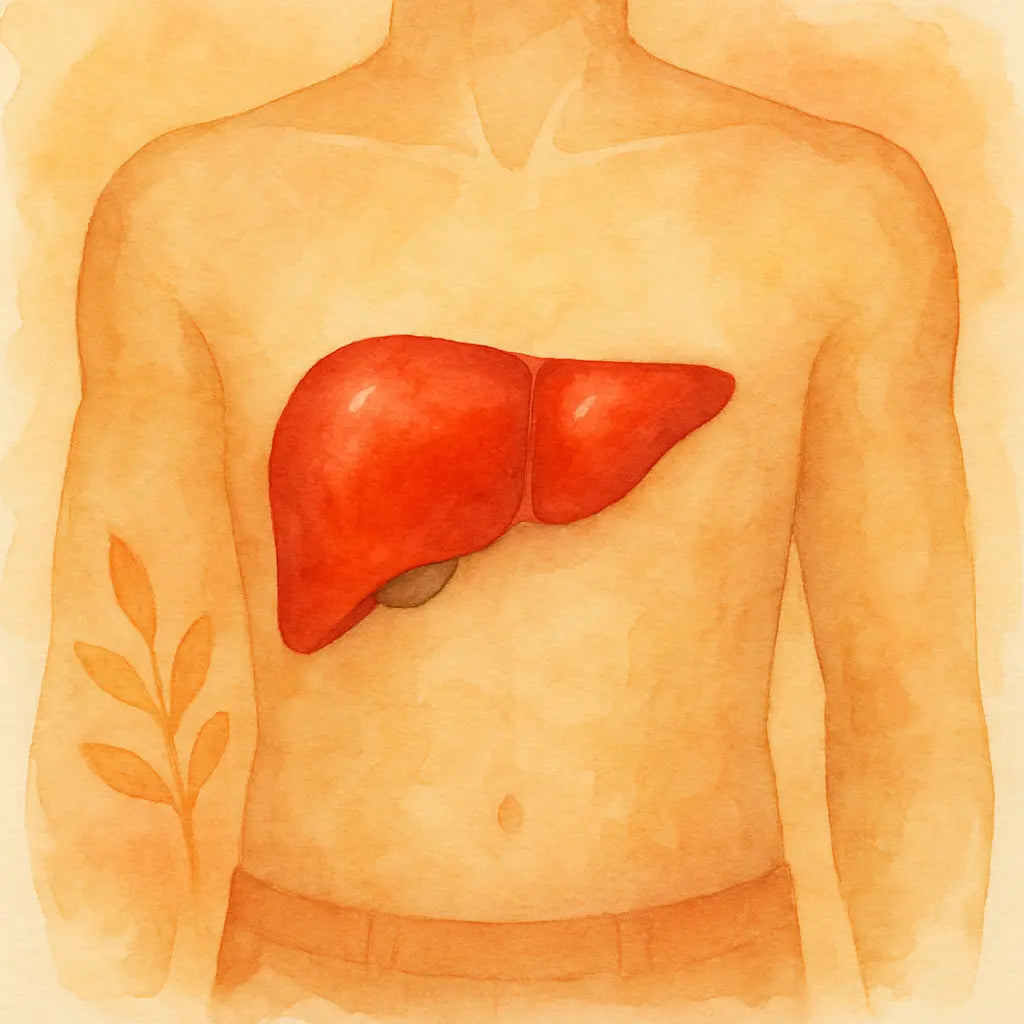
In today's world, where fad diets and exercise programs promise quick results, many people struggle to lose weight effectively and sustainably. This article explores in depth why the liver plays a central role in weight regulation and why ignoring it can sabotage any weight loss effort.
The liver is not only a detoxification organ but also a key regulator of fat and carbohydrate metabolism. Without optimal liver function, the body cannot burn fat efficiently, leading to a weight loss plateau. This article breaks down this idea in detailed sections, supported by scientific explanations and related concepts.
Simple analogies, such as comparing the liver to a "filter" that becomes clogged with excess sugar, are used to illustrate how liver damage, such as fatty liver, impedes the mobilization of stored fat. We will explore these concepts extensively to provide a comprehensive and actionable guide.
2. The Role of the Liver in Metabolism and Weight Loss
The liver is one of the body's most versatile organs, performing over 500 essential functions. In the context of metabolism, it acts as the primary nutrient processor, converting carbohydrates into energy or fat, regulating blood sugar, and detoxifying harmful substances.
Key Liver Functions Related to Weight
- Carbohydrate Metabolism: The liver converts excess glucose into glycogen or fat. When there is excess sugar, it prioritizes storage over burning.
- Bile Production: Helps in the digestion of fats, essential for absorbing nutrients and eliminating toxins.
- Hormonal Regulation: It influences hormones such as insulin, which control fat storage.
- Detoxification: Eliminates toxins that, if they accumulate, can cause inflammation and insulin resistance.
A healthy liver acts as a "command center" for metabolism. If it's overloaded with sugar and starches, it becomes inflamed and accumulates fat (non-alcoholic fatty liver disease, NAFLD), preventing the body from accessing fat reserves for energy. This means that even with low-calorie diets, weight doesn't come off because the liver isn't cooperating.
In addition, the liver produces ketones during ketogenesis, a key process in low-carb diets for burning fat. Without a healthy liver, this process is compromised.
3. Why You Can't Lose Weight Without a Healthy Liver
The core argument is that a damaged liver, particularly one damaged by fat accumulation, creates a vicious cycle where the body cannot access its fat reserves. This is due to the insulin resistance induced by fatty liver, where cells do not respond properly to insulin, leading to further fat storage.
Specific Mechanisms
- Insulin Resistance: Excess sugar causes liver inflammation, reducing insulin sensitivity and promoting fat storage.
- Triglyceride Accumulation: The liver stores fat instead of exporting it, which blocks lipolysis (fat burning).
- Metabolic Alteration: An inflamed liver cannot efficiently regulate basal metabolism, reducing energy expenditure.
As long as there is glycogen in the liver, fat cells are not used for energy. Therefore, high-carbohydrate diets keep the liver "busy" with sugar, neglecting body fat. This is supported by research showing that sugar, not fat, causes liver damage and obesity.
Furthermore, conditions like NAFLD affect 25-30% of the population and are directly linked to obesity. Without addressing the liver, weight loss efforts fail, as seen in patients who regain weight after bariatric surgery without dietary changes.
4. Common Causes of Liver Problems that Affect Weight
Excessive carbohydrate consumption is the leading cause of weight-related liver problems. Sugar is toxic in excess, causing inflammation and fat accumulation in the liver.
Main Causes
- Excess Sugar and Starches: Converts into liver fat, leading to NAFLD.
- Carbohydrate Addiction: Treated as an addiction, since carbohydrates act as emotional "drugs".
- Alcohol and Toxins: They overload the liver, exacerbating the damage.
- Preexisting Obesity: Creates a cycle where abdominal fat directly affects the liver.
Sugar causes dyslipidemia and insulin resistance, meaning that sugar is toxic in any body compartment. Studies show that refined carbohydrates are worse than pure sugar for fatty liver.
Other causes include fad diets that eliminate food groups without considering liver health, or the use of medications that stress the organ. Ignoring the emotional connection to carbohydrates leads to relapses.
5. How to Support the Liver to Facilitate Weight Loss
Supporting the liver involves reducing the toxic load and promoting its regeneration. A therapeutic restriction of carbohydrates is advocated to allow the liver to heal.
Key Strategies
- Reduce Carbohydrates: Switch to a low-carb diet to deplete liver glycogen and promote fat burning.
- Increase Protein and Healthy Fats: They provide nutrients without overloading the liver.
- Supplements: Such as NAC to increase glutathione, a liver antioxidant.
- Moderate Exercise: Not to burn calories, but to improve insulin sensitivity.
Exercise alone won't help with weight loss without dietary changes, as the liver needs to be prepared to process fat. Also, avoid trendy "liver cleanses," as there's no evidence they work and they can be dangerous.
6. Practical Advice, Diet and Lifestyle
To implement these concepts, a practical approach focused on sustainable changes is suggested.
Diet Plan
- Eliminate Sugars and Grains: Avoid bread, pasta, rice, and sweets.
- Consume Vegetables and Proteins: Leafy greens, meats, eggs and nuts.
- Drink vegetable juices: For liver nutrients, but without high-sugar fruits.
- Alcohol Limit: Less than 2-3 drinks per day, preferably zero.
Lifestyle: Get enough sleep, manage stress (as it affects the liver), and monitor your weight and symptoms. Losing weight reduces liver fat, improving inflammation.
To structure information, use divs like this for lists of recommended foods.
7. Scientific Evidence and Explanations
This approach is supported by surgical experience and research in liver metabolism. Studies show that sugar, not fat, causes liver inflammation. Research indicates that carbohydrate restriction reverses NAFLD.
Detailed explanations include how the liver responds to injury with fat accumulation, and how obesity is a consequence of carbohydrate addiction. It has been observed in thousands of patients that without addressing the liver, interventions fail in the long term.
Other sources confirm that weight regulates naturally once the liver heals, without the need for strict calorie counting. This makes the approach holistic and evidence-based.
8. Conclusion
In short, supporting your liver is the first essential step toward effective weight loss. By reducing carbohydrates, addressing addictions, and adopting healthy habits, you can unlock your body's potential to burn fat. Consult a professional before making drastic changes, but remember: the liver is key to optimal metabolic health.