Black Seed Oil: The Ancient Supplement with Modern Therapeutic Benefits
There is a natural supplement, known for millennia but often under the radar of the general public, that has been the object of almost mythical historical reverence. It is credited with a famous quote from the Muslim prophet Muhammad, who supposedly claimed that it "cures everything except death." While this may sound like hyperbole, a closer look at its properties reveals such a wide range of health benefits that its legendary reputation is beginning to gain a solid scientific basis. This article explores black cumin seed oil, its active compound, and the growing body of research that supports its use in everything from metabolic health to dermatology and immune function.
What exactly is black cumin oil?
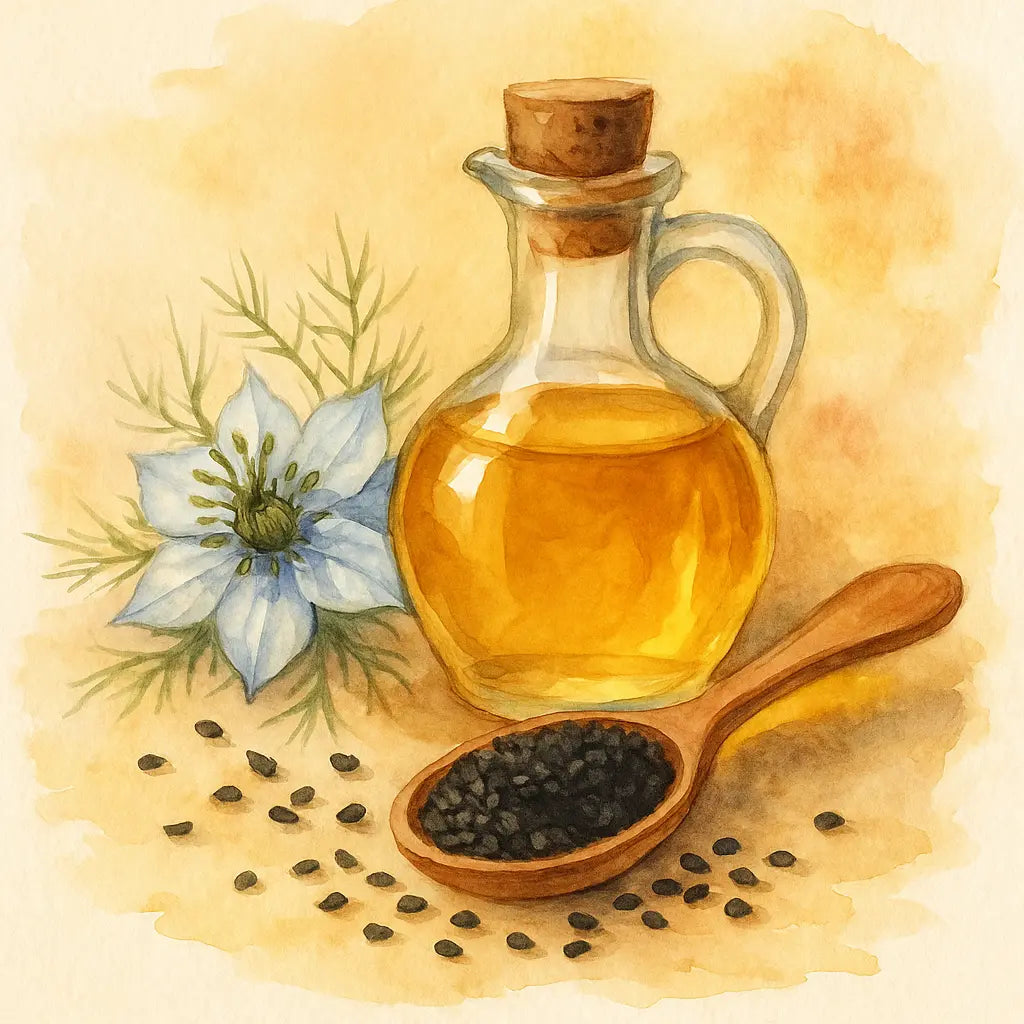
Black cumin seed oil, botanically known as Nigella sativa , is extracted from the seeds of the black cumin plant. This plant, which belongs to the buttercup family (Ranunculaceae), is native to regions of Southwest Asia, the Mediterranean, and Africa. Its use is not a recent trend; it has been present in traditional medicine systems for eons, earning a place of honor in various cultures for its vast healing properties.
The historical reverence for this oil is profound. As mentioned, Islamic tradition holds it in high esteem, citing the belief that it offers a cure for a multitude of ailments. This historical perspective, while it may seem exaggerated, is increasingly being validated by modern science, which has begun to decipher the biological mechanisms behind its multiple therapeutic uses.
The Heart of Black Cumin: Thymoquinone (TQ)
The key to black cumin seed oil's potency lies in its complex chemical profile, but one compound stands out above all others: thymoquinone (TQ) . This molecule is considered the main bioactive ingredient and is responsible for most of its pharmacological effects. When looking for a black cumin seed oil supplement, the concentration of thymoquinone is the most important quality factor to consider, as not all commercial products offer it in the same quantity.
In addition to thymoquinone, the oil is a rich source of several essential fatty acids. It contains predominantly Omega-6 fatty acids (such as linoleic acid) and Omega-9 fatty acids. It also includes a small amount of Omega-3 , likely in the form of alpha-linolenic acid (ALA), unlike the preformed forms of DHA and EPA found in fish oil. This composition places it alongside other beneficial oils such as fish oil and extra virgin olive oil, although each has distinct profiles and benefits.
A Therapeutic Arsenal: Main Health Benefits
The wide range of benefits of black cumin seed oil is what makes it so unique. These benefits range from metabolic regulation to immune support and skin health. The most researched benefits are detailed below.
1. Blood Sugar Regulation and Diabetes Support
One of the most promising areas of research is its effect on metabolic health. A 2019 medical review found that black cumin seed oil helped stabilize elevated blood sugar levels, a condition known as hyperglycemia. Hyperglycemia, associated with insulin resistance, is a direct precursor to type 2 diabetes, a disease that has reached epidemic proportions worldwide.
The mechanism of action appears to be twofold: on the one hand, it can increase insulin production in the pancreas, and on the other, it helps reduce insulin resistance in cells. This combination is essential for maintaining healthy glycemic control and preventing progression to diabetes.
2. A Natural Ally in Weight Management
Due to its metabolic benefits, black cumin seed oil has also proven helpful for weight loss. A study published in the Journal of Diabetes and Medical Disorders identified it as a natural and effective aid for this purpose.
A 2020 randomized clinical trial yielded more specific results. In this study, 45 overweight or obese women took 2,000 milligrams (2 grams) of black cumin seed oil daily for 8 weeks. The results were remarkable and included:
- Reduced appetite.
- Decrease in body mass index (BMI).
- General weight loss.
- Reduction of body fat.
- Decrease in waist circumference.
Furthermore, a 2018 systematic review and meta-analysis that evaluated 11 placebo-controlled trials also concluded that black cumin supplementation helps reduce body weight. However, it is crucial to understand the context: black cumin oil is not a magic bullet. It acts as a supplement that facilitates and possibly accelerates the fat loss process when combined with a proper diet and exercise regimen. Its ability to help regulate blood glucose also contributes to better appetite control.
3. Powerful Antibacterial, Antifungal and MRSA Action
Historically, plant extracts have been used to fight infections, and black cumin seed oil is a potent example. Its spectrum of action is remarkably broad. A study conducted in India investigated its potency against drug-resistant bacteria. Of 144 strains tested, many of which were resistant to multiple antibiotics, 97% were inhibited by black cumin seed oil. A 2022 study further confirmed its antimicrobial activity.
Its power isn't limited to bacteria. Egyptian scientists tested compounds in black cumin oil, specifically thymoquinone and thymohydroquinone, against 30 human pathogens. They found that each compound showed 100% inhibition of all 30 pathogens, highlighting its incredible potential for treating infections.
It has even been shown to help treat MRSA (methicillin-resistant Staphylococcus aureus ), a notorious and difficult-to-eradicate superbug. Black cumin oil was found to be effective against this strain and helped slow or stop its uncontrolled spread.
4. Topical Applications for Skin and Hair
The benefits of black cumin seed oil aren't just internal. Its potent antimicrobial and anti-inflammatory properties make it an excellent topical treatment for various skin and hair conditions.
Skin Care: Acne and Eczema
When applied directly to the skin, it can help soothe conditions like acne and eczema. Acne, essentially an inflammatory disease, responds well to its effects. A 2020 study found that a topical gel made with black cumin extract, applied twice daily for two months, helped reduce acne severity by nearly 80%. Researchers noted a significant decrease in the number of acne lesions compared to the control group.
Another study by Iranian researchers compared black cumin seed oil with betamethasone cream, a topical corticosteroid commonly used to treat inflammatory skin lesions. The study concluded that black cumin seed oil was as effective as the drug in improving the quality of life for patients with hand eczema.
Hair Health: Density and Growth
The oil also benefits hair health. It contains a substance called nigellone , which has been identified as an antihistamine. Animal studies suggest that this property may help with hair loss due to androgenetic alopecia (male pattern baldness, related to DHT) and alopecia areata (patchy hair loss).
Its antioxidant, antibacterial, and general anti-inflammatory properties contribute to a healthier scalp, reducing the incidence of dandruff and dryness. A 2020 study observed that daily use of a lotion derived from black cumin seed oil for three months boosted hair density and thickness in subjects experiencing hair loss, making it the most effective among several seed oils tested.
5. Respiratory System Support and Asthma
The anti-inflammatory properties of black cumin seed oil are particularly beneficial for lung health. Asthma, although it has an allergic component, is considered primarily an inflammatory disease. A 2020 meta-analysis of four randomized controlled trials examined the effect of black cumin seed oil on asthma management and concluded that its anti-inflammatory benefits appeared to help patients.
Another 2020 study investigated a different delivery method: patients with asthma inhaled boiled black cumin extract. The results showed a clear bronchodilator effect, meaning it helped open the bronchial tubes, allowing patients to breathe more easily and improving key markers such as lung function and respiratory rate.
6. Improvement of Male Fertility and Testosterone
The research also points to significant benefits for male reproductive health. A randomized, double-blind, placebo-controlled clinical trial evaluated whether black cumin seed oil could help infertile men with abnormal sperm counts. The group that took 2.5 milliliters of black cumin seed oil orally showed improvements in their sperm count compared to the placebo group.
A 2015 study published in the Journal of Herbal Medicine delved deeper into this effect. It discovered that black cumin can positively influence sperm parameters, Leydig cells (the cells in the testicles that produce testosterone), and even beneficially affect testosterone synthesis by helping to maintain the health of these cells.
7. Impact on Blood Lipids and Hypertension
Cardiovascular health is another area where black cumin shows potential. A 2017 animal model found that an aqueous extract not only had antidiabetic effects but also reduced cholesterol levels in the animals. After six weeks of administering low doses to diabetic animal subjects, total cholesterol and glucose levels decreased, while HDL (the so-called "good cholesterol") increased.
These benefits extend to humans. A study in human subjects with mild hypertension (high blood pressure) divided participants into groups. One group took 100 milligrams of black cumin twice a day, while another took 200 milligrams (and a placebo group). After 8 weeks, researchers found that the people taking the black cumin supplement showed a decrease in both systolic and diastolic blood pressure in a dose-dependent manner, meaning that the more they used it, the more their blood pressure decreased.
8. Research on its Anticancer Properties
Perhaps the most surprising research focuses on its potential to fight cancer. The antitumor effects of thymoquinone and another compound called thymohydroquinone have been analyzed in preclinical studies. One animal study found that these two chemicals resulted in a 52% decrease in tumor cells.
In vitro studies (in isolated cells) have shown that thymoquinone, the most abundant active ingredient, helped induce apoptosis (programmed cell death) in leukemia cells, breast cancer cells, and brain tumor cells. In other words, the addition of this compound caused the tumor cells to self-destruct.
A 2014 study found that black cumin seed oil may help prevent cancer by regulating several molecular processes related to cancer spread and tumor growth. While this research is in its early stages, it is immensely promising.
9. Liver Protection and Wound Healing
Among its many benefits, black cumin seed oil has also been observed to have protective effects on the liver. Furthermore, as mentioned in the dermatology section, thymoquinone has the ability to stimulate tissue growth, aiding in wound healing.
Dosage, User Experience and Safety
Method of Consumption, Dosage and Flavor Profile
Black cumin seed oil is available in capsules, but the liquid form is considered the best way to consume it. A typical dose ranges from 300 to 600 milligrams. In practice, this can be translated to one or two teaspoons per day.
However, there is one important caveat: the taste. Black cumin seed oil is notorious for having an extremely unpleasant flavor. It has been described as bitter and comparable to "drinking 30-pound motor oil." It is not a palatable supplement, and unlike fish oil, it doesn't typically come in flavors. A common strategy for masking the taste is to take the dose quickly and follow it with a pleasant-tasting beverage, such as a protein shake.
Supply Profile and Side Effects
Regarding safety, black cumin oil is generally considered safe when consumed at recommended doses. As with any substance, the potential for side effects depends on the duration and dosage. Natural products are typically non-toxic at low doses and can be taken for extended periods.
However, taking extremely large doses of any supplement, including black cumin oil, could cause problems. Staying within the suggested dosage range (for example, one or two teaspoons per day) appears to be a safe and effective practice for most people.
Advanced Considerations: Omega Balance and Buying Guide
The Role in the Balance of Fatty Acids (Omega-3 and Omega-6)
An interesting aspect of black cumin seed oil is its fatty acid profile, which is rich in Omega-6. While Omega-6 is abundant in the modern diet, it is an essential fatty acid. For people who consume large amounts of Omega-3 (for example, through fish oil supplements), black cumin seed oil can help balance their intake of essential fatty acids.
A healthy balance between Omega-6 and Omega-3 is always desirable. Some research suggests a 4:1 ratio (Omega-6 to Omega-3), but a 1:1 ratio may be a more optimal target for reducing inflammation and maintaining cellular health.
Buyer's Guide: What to Look For When Purchasing It
When buying black cumin seed oil, the most crucial factor to look for on the label is a high thymoquinone (TQ) content. This is the measure of the oil's potency. There is a wide range of prices, often correlated with the TQ concentration. Some premium products may claim to have five times more thymoquinone than standard brands, but their cost will be significantly higher. A moderately priced product, taken consistently at a dose of two teaspoons per day, may provide a sufficient amount of this active ingredient.
Conclusion: A Bridge between Tradition and Science
Black cumin seed oil, or Nigella sativa , is a supplement that lives up to its historical reputation. Far from being a simple folk remedy, it is a complex compound backed by a growing body of scientific evidence. From helping to reverse insulin resistance and promote weight loss, to fighting drug-resistant bacteria, calming asthma, improving skin health, and showing potential anticancer properties in preclinical studies, its range of applications is immense.
While its taste may be challenging, its health benefits are profound and far-reaching. By seeking out products with a high concentration of its key ingredient, thymoquinone, consumers can take advantage of a remedy that has served as a bridge between ancient wisdom and modern therapeutic science.
[invalid URL removed]/youtube_content/3