
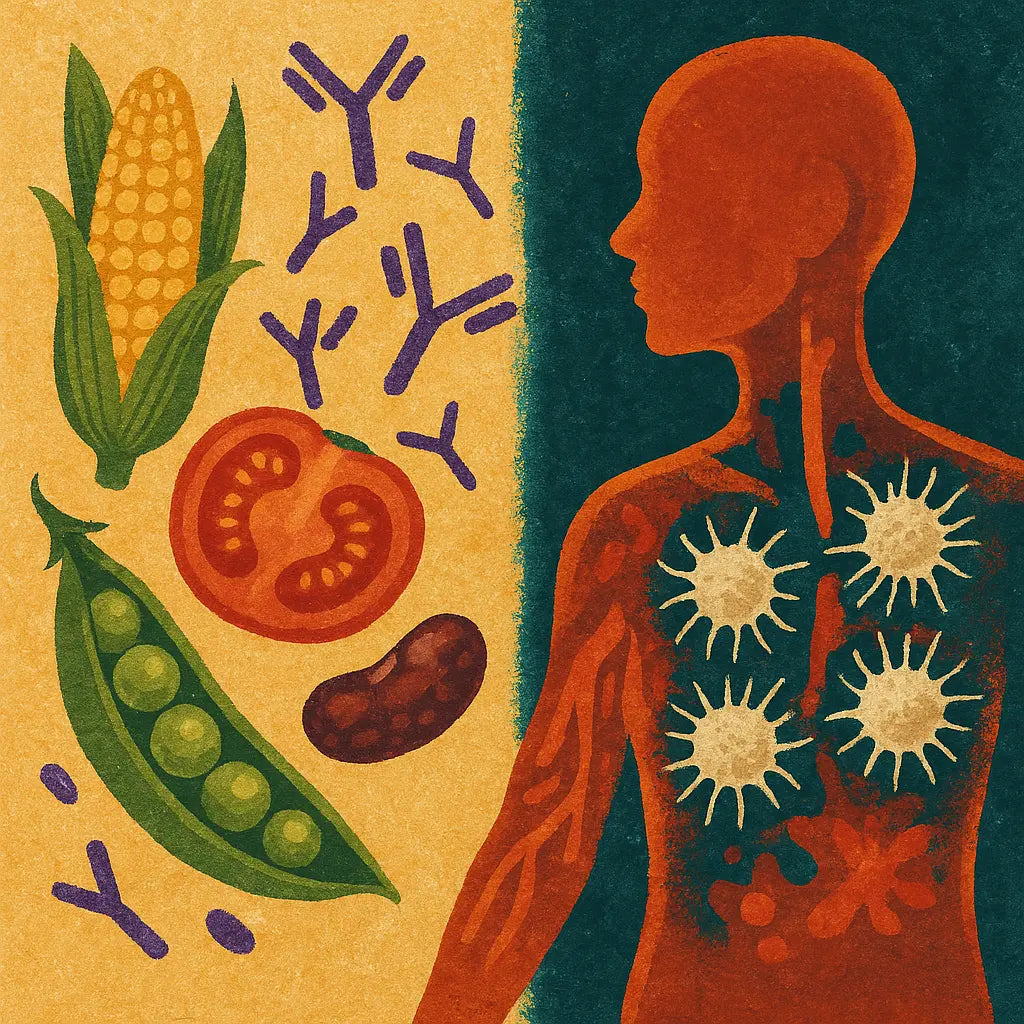
Lectins and their relationship with autoimmune diseases
A Hidden Threat in Modern Food
In recent decades, we have witnessed an exponential increase in the prevalence of autoimmune diseases, from rheumatoid arthritis to celiac disease and Hashimoto's thyroiditis. Simultaneously, nutritional science has uncovered the potential role of lectins—proteins present in many plant-based foods—as triggers for these conditions. This article explores in depth how these seemingly innocuous substances can contribute to the development of autoimmune diseases by compromising the intestinal barrier, generating molecular mimicry, and inappropriately activating the immune system.
What are lectins?
Lectins are a type of protein that binds specifically to carbohydrates, present in approximately 30% of the foods we consume. From an evolutionary perspective, plants developed lectins as a defense mechanism against predators, acting as "natural pesticides."
Key Characteristics of Lectins
- Resistance to digestion : Many lectins are not broken down by human digestive enzymes
- Thermal stability : Some withstand high cooking temperatures
- Binding capacity : They can bind to specific receptors on human cells
- Specificity : Each lectin has an affinity for particular carbohydrates
Not all lectins are problematic. Some have beneficial effects, such as those found in medicinal mushrooms. The problem arises with certain lectins in common foods that can trigger adverse immune responses in susceptible individuals.
Foods with High Content of Potentially Problematic Lectins
| Food | Lectin Type | Potential Effects |
|---|---|---|
| Wheat and other grains | Wheat germ agutinin (WGA) | It can cross the intact intestinal barrier and bind to immune cells. |
| Legumes (beans, lentils, peanuts) | Phytohemagglutinins | Powerful stimulation of the immune system, possible molecular mimicry |
| Solanaceae (tomato, eggplant, peppers, potatoes) | Lectin-like alkaloids | They can bind to glycoproteins in joints |
| Soy | Soy lectins | Interference with nutrient absorption, possible endocrine disruption |
| Conventional dairy products | Casein A1 | It can behave like a lectin, stimulating an inflammatory response |
Mechanisms by which Lectins Contribute to Autoimmunity
1. Damage to the Intestinal Barrier (Leaky Gut Syndrome)
Lectins can bind to specific receptors on intestinal epithelial cells (enterocytes), causing:
- Cytoskeleton destabilization : Altering the tight junctions between cells
- Zonulin induction : Protein that regulates intestinal permeability
- Mast cell activation : Releasing histamine and other inflammatory mediators
Studies show that wheat germ agglutinin (WGA) can increase intestinal permeability at concentrations as low as 5 μg/mL, facilitating the passage of food and bacterial antigens into the bloodstream, where they trigger immune responses.
2. Molecular Mimicry
Molecular mimicry occurs when the immune system mistakes food proteins (such as lectins) for components of the human body. This phenomenon involves:
- Structural similarity : Between amino acid sequences of lectins and human proteins
- Cross-reaction : Antibodies against lectins can attack the body's own tissues
- Shared epitopes : Identical molecular sequences between pathogens, food, and human tissues
Documented Examples of Molecular Mimicry
- Gluten/Transglutaminase : In celiac disease, antibodies against gliadin react with tissue transglutaminase
- WGA/Collagen : Wheat germ agglutinin shares similarities with type IV collagen
- Legumes/Insulin receptors : Some legume lectins can mimic hormone receptors
3. Direct Immune Activation
Lectins act as potent "immunostimulants" through multiple mechanisms:
- Activation of B lymphocytes : Stimulating antibody production
- Induction of pro-inflammatory cytokines : Such as IL-6, TNF-α and IFN-γ
- Stimulation of antigen-presenting cells : Increasing the immune response
- Modulation of regulatory T cells : Reducing immunological tolerance
A study published in Nutrients (2020) showed that WGA can increase the production of IL-12 and IL-23 in dendritic cells, two key cytokines in the pathogenesis of autoimmune diseases such as multiple sclerosis and psoriasis.
Autoimmune Diseases Linked to Lectins
1. Celiac Disease and Non-Celiac Gluten Sensitivity
Although gluten (specifically gliadin) is not technically a lectin, it shares similar properties:
- Resistance to proteolytic digestion
- Ability to increase intestinal permeability
- Induction of adaptive immune response
WGA in wheat can exacerbate these effects and contribute to cross-reactivity.
2. Rheumatoid Arthritis
Multiple mechanisms link lectins to this disease:
- Deposition of immune complexes in joints
- Molecular mimicry with cartilage proteins
- Activation of inflammatory pathways such as NF-κB
3. Hashimoto's thyroiditis
Lectins can:
- To attach directly to the thyroid gland
- Interfere with iodine absorption
- Stimulate production of antibodies against TPO and thyroglobulin
4. Inflammatory Bowel Disease (Crohn's, Ulcerative Colitis)
Lectins exacerbate intestinal inflammation by:
- To directly damage the intestinal epithelium
- Altering the microbiota (dysbiosis)
- Activate dysregulated immune responses
A prospective cohort study found that regular consumption of legumes (rich in lectins) was associated with a 38% increased risk of developing Crohn's disease in genetically susceptible individuals.
Strategies to Reduce the Impact of Lectins
1. Dietary Modifications
Foods to Reduce or Temporarily Eliminate
- Grains : Especially wheat, rye, barley (contain WGA)
- Legumes : Beans, lentils, peanuts, soybeans (high in phytohemagglutinins)
- Solanaceae : Tomatoes, eggplants, peppers, potatoes (except sweet potatoes)
- Conventional dairy products : Casein A1 can behave as a lectin
Safe Foods and Alternatives
- Vegetables : Leafy greens, cruciferous vegetables, zucchini, asparagus
- Low-sugar fruits : Berries, lemons, limes, avocados
- Healthy fats : Olive oil, avocado, coconut, ghee
- Animal proteins : Quality meats, wild fish, eggs
2. Preparation Techniques to Reduce Lectins
- Prolonged soaking : 12-24 hours with water changes (for legumes)
- Fermentation : Reduces lectins by up to 95%
- Pressure cooking : More effective than boiling at deactivating lectins
- Germination : Reduces lectins in seeds and grains
3. Supplements and Key Nutrients
| Supplement | Mechanism of Action | Recommended Dosage |
|---|---|---|
| L-Glutamine | It repairs the intestinal barrier. | 5-15 g/day |
| Probiotics (specific) | Restores microbiota, competes with lectins | 25-100 billion CFU/day |
| Digestive enzymes (DPP-IV) | It degrades lectin-like proteins | With meals |
| N-Acetyl Glucosamine | It competes with lectins for binding sites | 500-1000 mg/day |
| Curcumin | Reduces intestinal inflammation | 500-1000 mg/day |
4. Reintroduction Protocol
Once intestinal health has improved (usually after 3-6 months), some lectins can be selectively reintroduced:
- Start with small amounts of one food at a time.
- Observe for symptoms for 3 days (joint pain, fatigue, digestive problems)
- Prioritize traditionally prepared methods (soaked, fermented)
- Consider reactivity tests (IgG, cell activation tests)
Conclusion: A Personalized Approach
The relationship between lectins and autoimmune diseases represents an emerging paradigm in functional and nutritional medicine. While not everyone reacts negatively to lectins, those with a genetic predisposition, leaky gut, or established autoimmune diseases can benefit significantly from a diet low in specific lectins. The key is individualization—what is medicine for one may be poison for another. Working with a qualified healthcare professional can help identify the specific problematic lectins for each individual, allowing for a diet that promotes immune health without unnecessary long-term restrictions.
Scientific References
- Vojdani, A. (2015). Lectins, agglutinins, and their roles in autoimmune reactivities. Alternative Therapies in Health and Medicine, 21 Suppl 1, 46-51.
- Cordain, L., et al. (2000). Modulation of immune function by dietary lectins in rheumatoid arthritis. British Journal of Nutrition, 83(3), 207-217.
- Freed, D.L.J. (1999). Do dietary lectins cause disease? BMJ, 318(7190), 1023-1024.
- Pusztai, A., et al. (1993). Antinutritive effects of wheat-germ agglutinin and other N-acetylglucosamine-specific lectins. British Journal of Nutrition, 70(1), 313-321.
- Myers, A. (2016). The Autoimmune Solution. HarperOne.
- Gundry, S. R. (2017). The Plant Paradox. HarperWave.
- Fasano, A. (2020). Gut permeability, zonulin and autoimmune diseases. Nature Reviews Gastroenterology & Hepatology, 17(3), 153-154.
- Jansson, A., et al. (2021). Wheat germ agglutinin induces Th2 polarization in human dendritic cells. Scientific Reports, 11(1), 12396.