
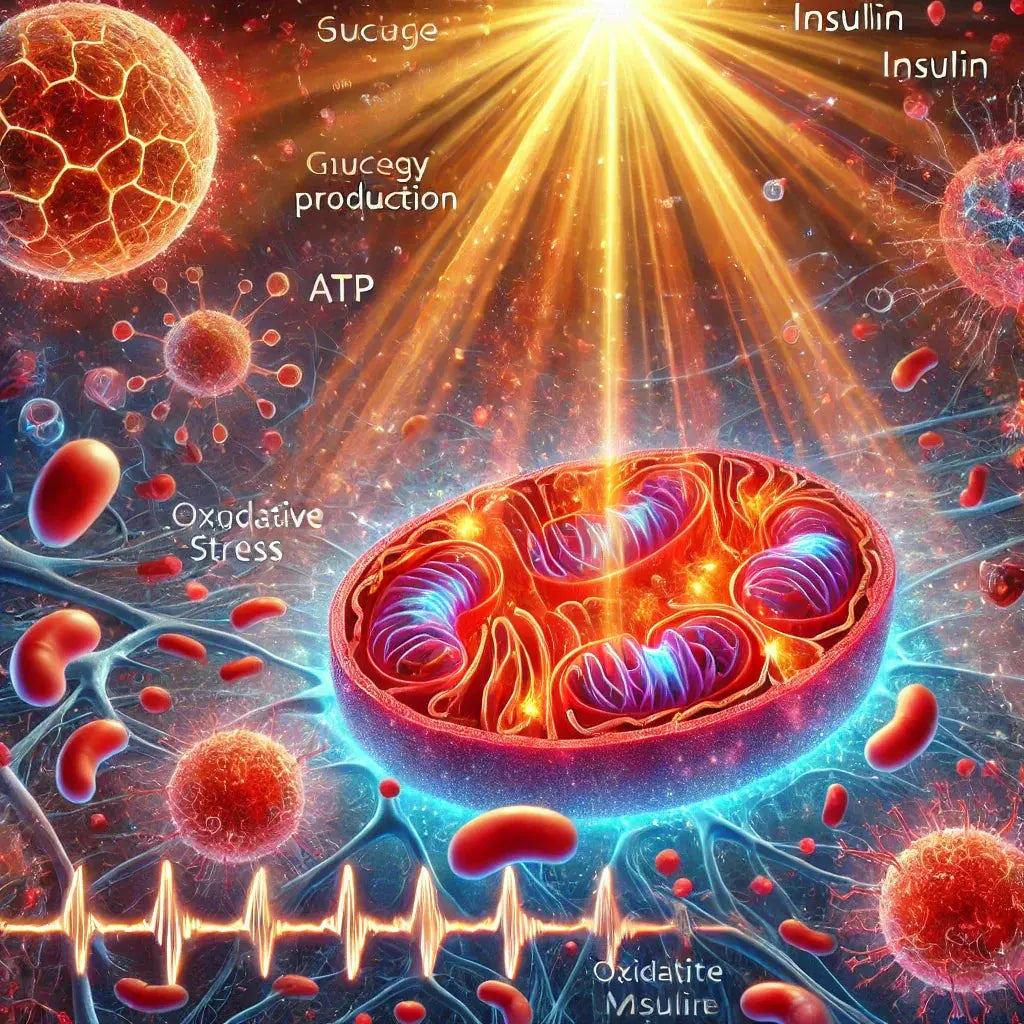
The relationship between mitochondrial dysfunction and diabetes, especially type 2, is an emerging area of research revealing how mitochondria are a central factor in the pathophysiology of this disease. Sunlight, specifically red and near-infrared (NIR) light, plays a crucial role in improving mitochondrial function and, consequently, in metabolic regulation. We will now delve deeper into this aspect.
1. Mitochondria and energy metabolism
Mitochondria are the "powerhouses" of cells, responsible for producing ATP (adenosine triphosphate) through oxidative phosphorylation. In people with type 2 diabetes, mitochondrial dysfunction leads to:
- Reduced ATP production : This limits the energy available to cells, making it difficult to take up and use glucose.
- Accumulation of free radicals : Oxidative stress damages proteins, lipids, and mitochondrial DNA, worsening insulin resistance and inflammation.
2. Sunlight and interaction with mitochondria
Sunlight, especially red (600-700 nm) and near-infrared (700-1100 nm) wavelengths, can penetrate tissues and reach the mitochondria. This process, known as photobiomodulation , stimulates mitochondrial function through several mechanisms:
a) Stimulation of complex IV of the electron transport chain
- Red light and NIR activate cytochrome c oxidase (complex IV), a key component in the mitochondrial respiratory chain.
- This improves electron flow and increases ATP production, restoring the cell's ability to metabolize glucose efficiently.
b) Reduction of oxidative stress
- Activation of cytochrome c oxidase reduces the accumulation of electrons in complexes I and III, decreasing the production of reactive oxygen species (ROS) .
- Less ROS means less damage to proteins and lipids related to insulin signaling, improving sensitivity to this hormone.
c) Increase in mitochondrial biogenesis
- Near-infrared light stimulates the expression of factors such as PGC-1α (peroxisome proliferator-activated receptor gamma coactivator), which promotes the creation of new mitochondria.
- This increase in the number and functionality of mitochondria helps to restore metabolic balance.
3. Mitochondrial dysfunction and insulin resistance
Insulin resistance, a characteristic of type 2 diabetes, is closely linked to impaired mitochondrial ability to process nutrients, especially fatty acids and glucose. Under conditions of mitochondrial dysfunction:
- Lipids are not oxidized efficiently, leading to the accumulation of toxic lipid intermediates such as diacylglycerol (DAG) and ceramides . These compounds inhibit insulin signaling.
- Glucose is not metabolized properly, which exacerbates hyperglycemia.
Exposure to sunlight, by improving mitochondrial function, can break this cycle by restoring the cell's ability to process both lipids and glucose.
4. Systemic effect of mitochondrial enhancement
Improving mitochondrial function not only impacts local metabolism, but also has systemic effects on key organs:
a) Skeletal muscle
- Muscle is responsible for most of the insulin-induced glucose uptake.
- Mitochondrial dysfunction in muscle reduces its ability to absorb glucose, but near-infrared light can improve muscle energy efficiency.
b) Liver
- In diabetes, the liver produces excessive glucose (gluconeogenesis). Mitochondrial enhancement reduces this process by restoring energy balance.
c) Adipose tissue
- Photobiomodulation improves mitochondrial function in adipose tissue, increasing the ability to oxidize lipids and reduce fat storage, thereby mitigating insulin resistance.
5. Scientific evidence
- Animal studies : Exposure to near-infrared light has been observed to improve mitochondrial function, reduce hyperglycemia, and improve insulin sensitivity in type 2 diabetes models.
- Human studies : Although more limited, some preliminary trials show that red or infrared light therapy can improve metabolic parameters in people with insulin resistance.
6. Practical implications
Given the central role of mitochondrial dysfunction in diabetes and the positive impact of sunlight:
- Regular sun exposure is recommended, especially during times when red and infrared wavelengths predominate (sunrise and sunset).
- The use of red light therapy devices can be a complementary strategy for people with limited access to sunlight.
Other influential factors related to sunlight
1. Circadian rhythm and its metabolic impact
The circadian rhythm is an internal clock that regulates numerous biological processes, including glucose metabolism, insulin sensitivity, and energy storage. This clock relies primarily on environmental cues such as sunlight to synchronize.
Key mechanisms:
- Circadian disruption : Insufficient exposure to sunlight, especially in the morning, disrupts the circadian rhythm. This directly affects the beta cells of the pancreas, reducing their ability to release insulin properly.
- Hormonal dysregulation : Lack of sunlight affects the secretion of melatonin and cortisol. Excess cortisol (chronic stress) combined with elevated insulin levels creates insulin resistance.
- Disruption of nighttime metabolism : Without adequate exposure to daylight, the body does not achieve an optimal transition between energy storage (day) and cellular repair (night) states, which favors fat accumulation and hyperglycemia.
Evidence:
- Night workers or people with irregular schedules have a higher risk of developing type 2 diabetes.
- Studies show that artificial light therapy can improve glucose levels and restore insulin sensitivity.
2. Vitamin D production and its metabolic influence
Sunlight is the main source of vitamin D, which is essential for glucose metabolism and insulin sensitivity.
Key mechanisms:
- Regulation of insulin sensitivity : Vitamin D modulates the expression of insulin receptors in cells, improving their ability to take up glucose.
- Reduction of inflammation : Optimal levels of vitamin D reduce inflammatory markers such as IL-6 and TNF-α, which contribute to insulin resistance.
- Protection of pancreatic beta cells : Vitamin D protects insulin-producing cells against oxidative stress and apoptosis, promoting adequate secretion of this hormone.
Evidence:
- People with vitamin D deficiency have a significantly higher risk of developing type 2 diabetes.
- Supplementing vitamin D in people with low levels has been shown to improve glucose tolerance and reduce fasting insulin levels.
3. Nitric oxide (NO) and metabolic health
Nitric oxide is a signaling gas produced in the skin when exposed to the sun's UV light. This compound plays a crucial role in regulating metabolism and vascular function.
Key mechanisms:
- Improved insulin sensitivity : NO facilitates glucose uptake in muscle tissues by improving intracellular insulin signaling.
- Blood pressure reduction : Nitric oxide (NO) relaxes blood vessels, improving circulation. This is crucial for diabetic patients, who often suffer from hypertension and poor tissue perfusion.
- Reduction of oxidative stress : NO counteracts the damaging effects of reactive oxygen species, protecting cells from further damage.
Evidence:
- People regularly exposed to sunlight have a lower risk of hypertension, a key risk factor for diabetes.
- In animal models, nitric oxide administration improves insulin sensitivity and reduces inflammation.
4. Intestinal microbiota and its interaction with sunlight
The gut microbiota is increasingly recognized as an important regulator of metabolism and overall health. Exposure to sunlight indirectly affects the microbiota, influencing its composition and function.
Key mechanisms:
- Microbial diversity : Sunlight stimulates the production of vitamin D and nitric oxide, which in turn promote a diverse and balanced gut microbiome. This is crucial, as an imbalanced microbiota is linked to insulin resistance.
- Production of beneficial metabolites : A healthy microbiota produces short-chain fatty acids (such as butyrate), which improve insulin sensitivity and reduce systemic inflammation.
- Gut-brain axis : Sunlight can influence neurotransmitters such as serotonin, which not only impact mood, but also appetite control and metabolic response.
Evidence:
- Exposure to ultraviolet light improves the microbiota profile in animal studies.
- In humans, a lack of sun exposure has been correlated with a less diverse microbiome and an increased risk of obesity and diabetes.
Practical solutions:
- Regular sun exposure (10-30 minutes a day).
- Prioritize morning exposure to synchronize the circadian rhythm.
- Supplement with vitamin D if deficient.
- Promote a healthy microbiome with a diet rich in prebiotics and fiber.
Sunlight not only regulates these processes independently, but also integrates them, restoring metabolic homeostasis and reducing the risk of diabetes.